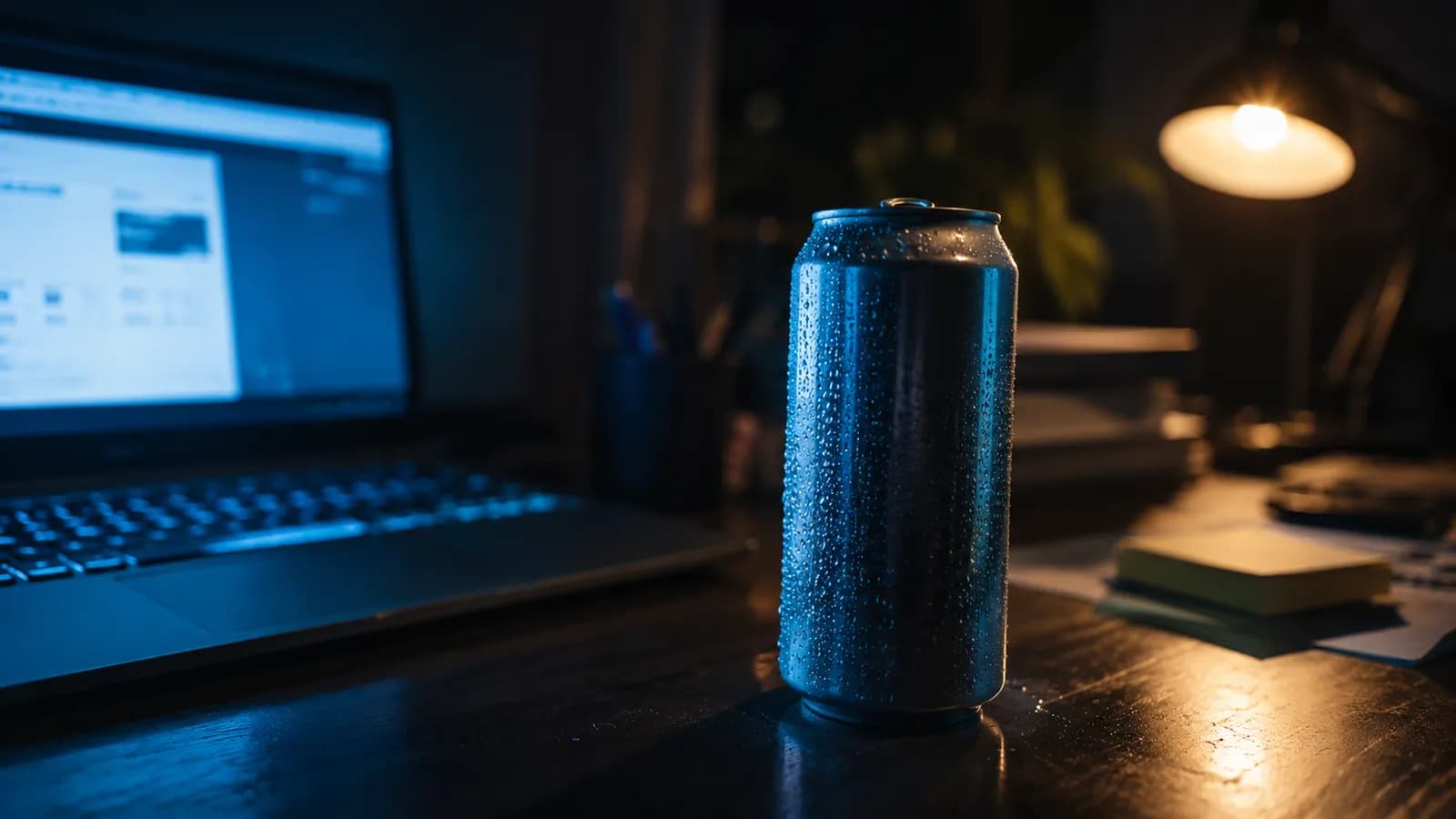
It's 3 a.m. The deadline is still open on the screen, your eyes are burning, and you reach into the fridge for a cold can. Ten minutes later caffeine hits your bloodstream, your heart picks up pace, and your brain gets fooled into thinking the tiredness is gone. It isn't gone. It's just hidden.
An energy drink isn't a burst of new energy - it's one simple mechanism at work. Caffeine blocks adenosine, a chemical your brain builds up all day to signal accumulated fatigue. While caffeine occupies those receptors, the signal can't get through. The tiredness keeps piling up. You just stop feeling it.
What's actually in the can
The range is wide. A single serving can contain anywhere from 6 to 242 mg of caffeine, according to testing of 27 products cited by Harvard Medical School. For comparison, a cup of coffee has roughly 100 mg, and a can of cola has about 50 mg.
The European Food Safety Authority (EFSA) considers up to 400 mg of caffeine a day safe for a healthy adult, with single doses up to 200 mg. Doctors recommend teenagers stay under 100 mg a day - less than what's in one large can of many popular brands.
Sugar is its own problem. The combination of sugar and caffeine produces a sharp energy spike followed by an equally sharp crash. Even sugar-free versions keep the high caffeine dose and the cardiovascular risks that come with it.
What happens to your heart
A 2025 systematic review published in Current Cardiology Reports analyzed 37 studies involving 1,597 people, average age 22.6. The results: energy drinks significantly raised heart rate in 60.9% of studies, systolic blood pressure in 53.8%, and diastolic blood pressure in 61.5%. Some studies recorded blood pressure jumps of 4 to 6 mmHg after a single can.
The ECG findings are more concerning. In 63.2% of studies examining it, researchers found QTc prolongation - a measure of how long the heart takes to "recharge" between beats. Too much prolongation raises the risk of dangerous arrhythmia. One study measured a 10-millisecond difference from placebo, still present four hours after the drink.
There's a catch, though. The review's authors are upfront about it: almost all the participants were young, healthy people not used to caffeine. How energy drinks affect people with hypertension, arrhythmia, or obesity is barely studied. The long-term effects of habitual use remain largely unknown.
If you have heart problems or high blood pressure, avoid energy drinks altogether, warns Harvard Health. For healthy people, the advice is no more than one can a day, and not as a daily habit.
Why it steals the sleep it later asks you to repay
This is where the cycle starts. A study of 1,287 Serbian teenagers aged 15 to 19, published in the journal Nutrients, found that only 29.5% of them got the recommended eight-plus hours of sleep. Regular energy drink consumption turned out to be an independent risk factor for insufficient sleep, in both boys and girls.
The mechanism is simple and unforgiving. Caffeine from an energy drink can keep interfering with sleep onset for up to eight hours after you drink it. A teenager reaches for a can during the day to power through a bad night, can't fall asleep that evening, and reaches for another can the next day. The fatigue never gets paid off. It just accrues interest.
Dependence: more than a habit
Caffeine is a psychoactive substance, and the body adapts to it. Tolerance can start building after as few as two consecutive days of regular use - the same dose delivers a weaker effect over time. About 9% of regular caffeine users meet the strict clinical criteria for dependence, and roughly 30% show at least some signs of it.
Withdrawal is not subtle. According to the StatPearls clinical reference (NCBI), withdrawal symptoms - headache in about half of cases, fatigue, irritability, trouble concentrating - begin 12 to 24 hours after the last dose, peak on the second day, and can last up to nine days. The cause is the same adenosine receptors: the body has adjusted to having them blocked, and without caffeine it suddenly processes a full day's worth of fatigue signals at once.
What actually wakes you up without a can
Pushing through the tiredness isn't the only option. Time magazine reported on an experiment comparing 10 minutes of stair climbing to a dose of caffeine roughly the size of a can of soda (about 50 mg) in sleep-deprived people. The stairs won.
The mechanism is different from caffeine's. Physical activity shifts neurotransmitter levels in the brain and increases blood flow, carrying more oxygen and nutrients to muscles and brain. It's not tricking your fatigue - it's a real supply of resources.
There's a downside: according to Harvard Health, the boost from a short walk fades faster than caffeine's does, and energy levels between the "walkers" and the "coffee drinkers" tend to even out after about an hour. On the plus side, a 20-minute brisk walk meaningfully eases caffeine withdrawal symptoms if you're cutting back - especially the fatigue and low mood.
In practice: if you hit a slump in the middle of the day, try 10 minutes of movement first - stairs, a brisk walk around the block, a glass of water, a short break by a window. It won't replace real sleep, but it won't create a debt you'll have to pay back with a sleepless night either.
What to remember
An energy drink doesn't give you energy - it hides, for a few hours, the fatigue you've already accumulated. The more often you do that, the bigger the debt gets: worse sleep, rising tolerance, cardiovascular risk with regular use. One can on an important night isn't a disaster for a healthy adult. But if you need a can every day just to feel normal, that's a signal to fix your sleep and your schedule, not to switch brands.
Back to that 3 a.m. deadline: the real problem was never the missing can in the fridge. It was getting to 3 a.m. in the first place. And that gets fixed by sleep, not by a can.
Sources