Common genetic variants explain about 16% of the differences in Alzheimer's risk between people, nearly three times the earlier estimate of 5%. That is the headline of the largest genetic study of the disease so far, which compared the DNA of about 2.8 million people, 183,620 of them with Alzheimer's. It was published in Nature on October 28, 2026, and summarized by Vrije Universiteit Amsterdam, which led the work.
One thing to get right from the start: the 16% describes a whole population, not you. It does not mean a sixth of any one person's disease is "written in their genes."
Why this reaches almost every family
According to the World Health Organization, 57 million people were living with dementia in 2021, with nearly 10 million new cases every year. Dementia, a lasting decline in memory and thinking that takes away a person's independence, is the fifth leading cause of death worldwide.
WHO estimates Alzheimer's is behind 60 to 70% of dementia cases, and more than 60% of people with dementia live in low and middle income countries. So "how much of this is inherited?" is a question asked by families in the US, Europe, Asia and Central Asia alike.
What the researchers did
This is a genome-wide association study, meaning scientists scan the DNA of huge numbers of people with and without a disease and look for spots that show up more often in those who have it.
- Data came from 30 research groups working in the Psychiatric Genomics Consortium, an international network of geneticists.
- About 2.8 million participants, 183,620 with Alzheimer's.
- The study was led by geneticist Danielle Posthuma in Amsterdam, with Douglas Wightman and Emil Uffelmann as first authors.
"This is the largest genetic association study on Alzheimer's to date"
Douglas Wightman, first author, Vrije Universiteit Amsterdam, October 28, 2026, university press release
127 spots in DNA, 48 of them new
The team found 127 regions of DNA linked to Alzheimer's risk, 48 of which had not been mapped before.
Think of each region as an address on the map of your genome where certain variants are more common in people with the disease. The address is not the disease. It is a clue about where to look next.
Why did the estimate jump from 5% to 16%? The authors say it mainly comes from a statistical method that better accounts for APOE, a gene with an unusually large effect on risk that used to distort the math for everything else.
The brain's immune cells take center stage
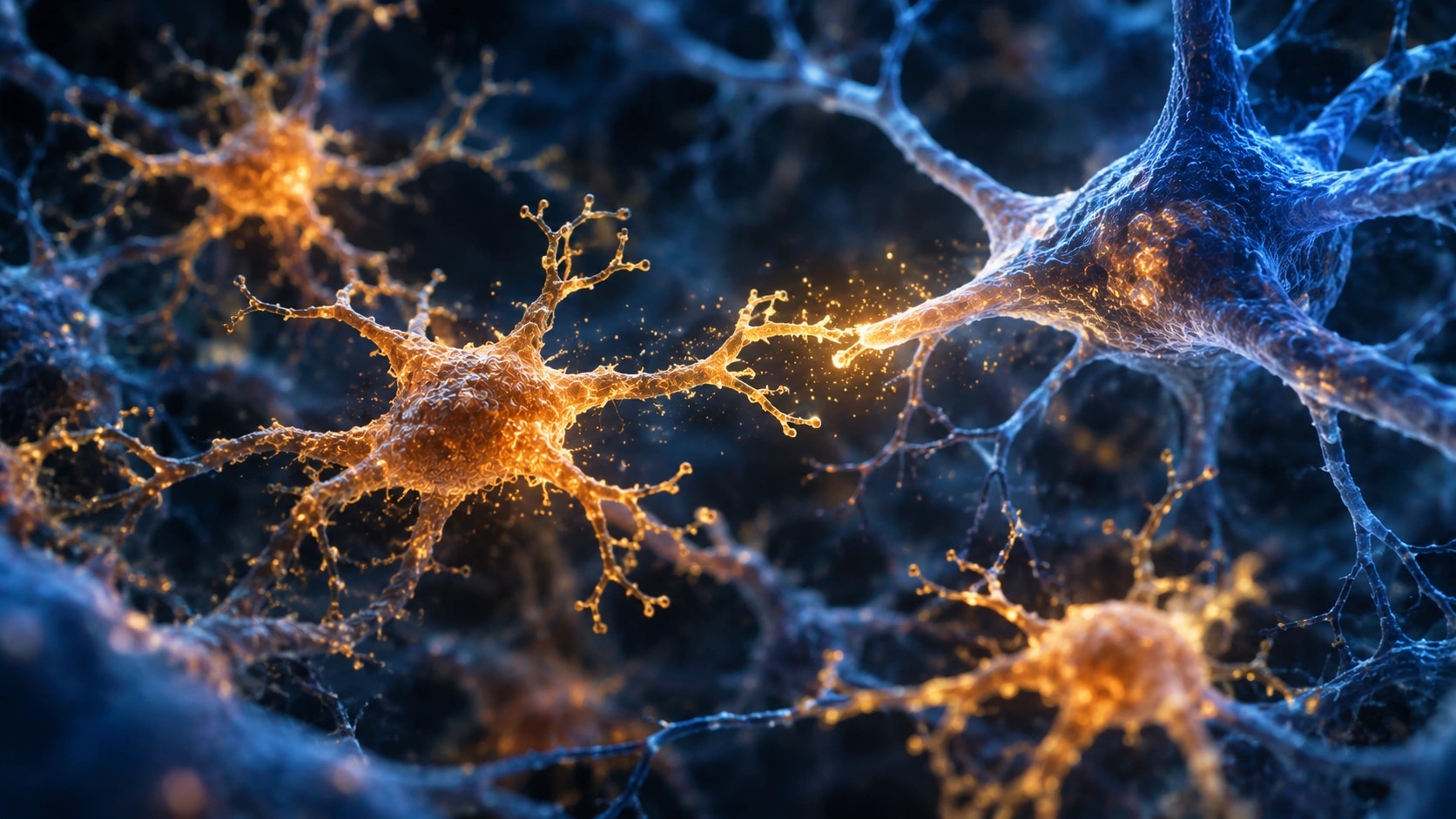
The most striking result is about cells, not genes. The risk variants cluster around microglia, the brain's immune cells, which clear away harmful substances and damaged cell debris, a bit like the cleaning crew in a large building.
When that crew works poorly, debris piles up. According to News-Medical's summary of the study, the signals point to microglia activation, immune cell recruitment and clearance. The researchers also found genetic signal in several types of neurons and in processes tied to nerve repair and the protective coating around nerve fibers.
Scientists suspected the immune link before. What is new is that risk can now be tied to specific processes and cell types.
What it means for you today
Nothing changes in diagnosis or treatment yet. The authors write that these associations are a starting point rather than proof that targeting any gene will help, and that multi-gene risk scores are mainly a research tool for now.
- A genetic test cannot tell you whether you will get Alzheimer's. The 16% describes populations, not individual fate.
- If a parent had Alzheimer's, it is a reason to talk to a doctor about age-appropriate memory checks, not a reason to panic.
- The rest of the risk is not explained by the genes in this study, and the study does not say what fills that gap or in what proportion.
Editorial view: the real value here is the map, not the 16% figure. The better scientists know which cells go wrong first, the shorter the road to drugs that target causes rather than symptoms. But going from a map to a medicine usually takes years.
What we still don't know
- Which of the 127 regions actually cause disease and which just sit nearby. That takes separate experiments.
- How well the findings hold for people of non-European ancestry. The authors describe participants from diverse genetic backgrounds, but the exact share is not in the open materials, and they flag it as future work.
- The full Nature paper is behind a paywall, so we relied on the university release and on coverage quoting the authors.
If memory and the brain interest you, see our pieces on how many steps a day you actually need and why your brain creates illusions.
How we checked
We read the October 28, 2026 release from Vrije Universiteit Amsterdam, the WHO dementia fact sheet and three news summaries (Medical Xpress, News-Medical, SciTechDaily). Numbers were matched across at least two sources. The Nature article page is paywalled, so its conclusions were not checked directly. AI helped find sources and draft the text, and the editors verified the facts and wording.
Sources
- Vrije Universiteit Amsterdam: Largest genetic study on Alzheimer's identifies 48 new risk loci (2026)
- Nature: Alzheimer's disease genetics converges on microglial and neuronal dysregulation (2026)
- World Health Organization: Dementia fact sheet (2026)
- Medical Xpress: Large-scale genetic study on Alzheimer's identifies new DNA risks (2026)
- News-Medical: Large genetic study uncovers new risk factors for Alzheimer's (2026)