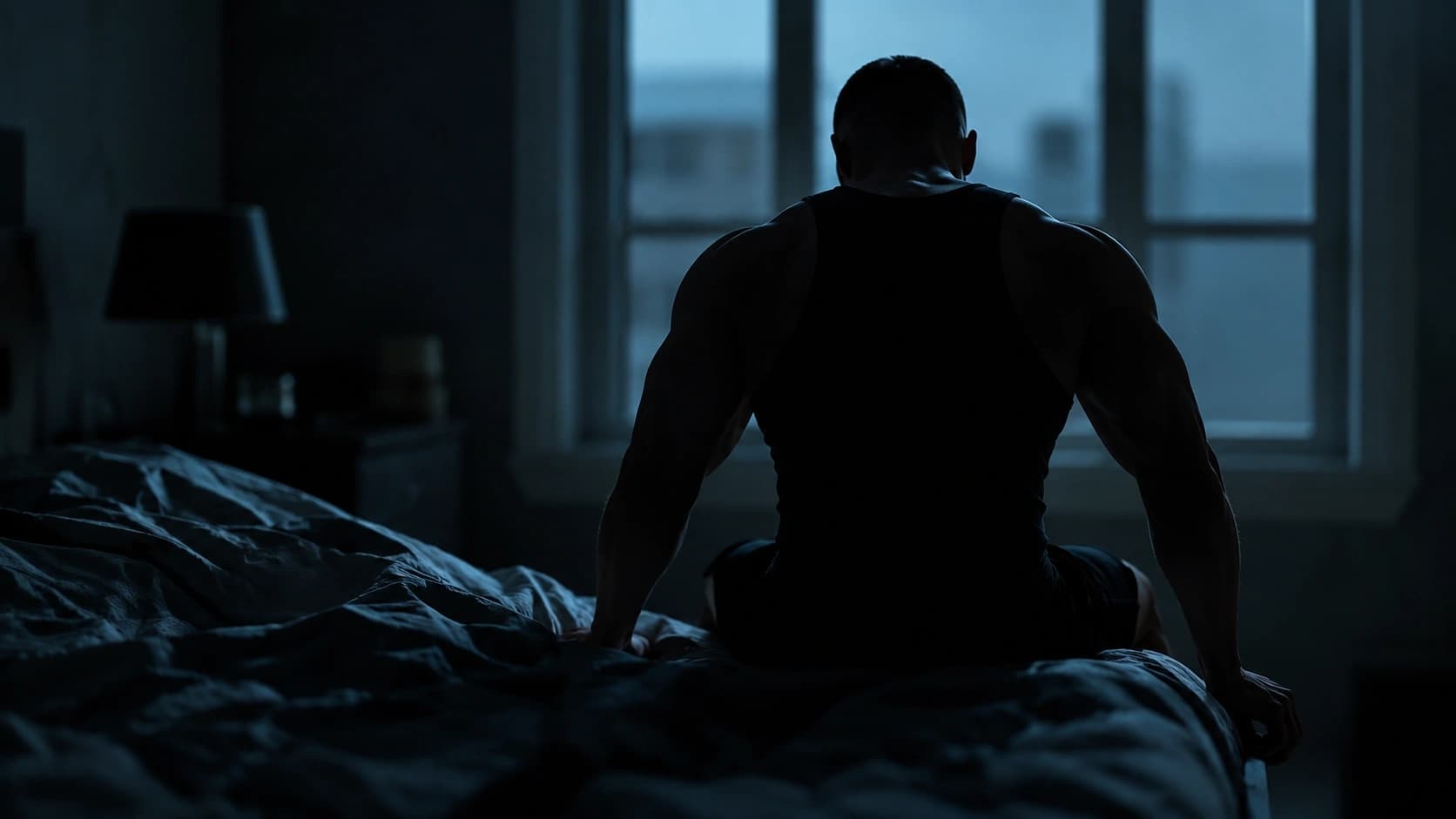
A teenager picks up a hammer and hits himself in the cheekbone. Not in a fight, not in a rage - following a video that sells this as a way to "grow" a jawline. Some parents end up hiding the tools around the house.
Looksmaxxing is the practice of squeezing the maximum out of your appearance, from brushing your teeth and sleeping properly all the way to surgery, injections and pills bought online. The word comes from "looks" plus "maxing" (pushing something to its limit). Some of what happens inside this movement is harmless. Some of it does nothing at all. And some of it leaves scars, breaks bones and ends in an emergency room.
Here is what holds up, what does not, what beauty is actually worth in money - and the point where self-care turns into a condition treated by therapists rather than surgeons.
What looksmaxxing actually means
Looksmaxxing is a set of appearance-improvement practices that grew out of male internet forums. Cleveland Clinic, a major US medical center, describes it as the promotion of a narrow masculine beauty standard combined with the belief that your worth depends on how you look.
The movement splits into two halves, and the difference matters more than anything else in this article.
- Softmaxxing - low-risk habits: sleep, food, exercise, skincare, haircuts, posture, teeth whitening, treating acne with a dermatologist.
- Hardmaxxing - invasive and dangerous methods: hitting your face, cutting yourself, hormones, steroids, unprescribed drugs, surgery.
Softmaxxing is basically a healthy routine with a new name. It works, because clear skin and real sleep genuinely change a face. Hardmaxxing changes a face too - usually not in the direction people wanted.
And here is where it gets strange. The most popular hardmaxxing methods are not built on medicine. They are built on physiology that somebody misread.
Bone smashing: why hitting your face does not build cheekbones
Bone smashing does not grow bone - it damages it. The practice involves striking your own cheekbones and jaw with a fist, a dumbbell, a massage tool or a hammer, hoping the micro-fractures will heal into a bigger, sharper bone.
The idea borrows from a real principle, Wolff's law: bone remodels itself in response to load. But it remodels internally - it gets denser under regular, moderate loading like running or lifting. A hammer is not loading. A hammer is trauma.
Plastic surgeon Christine Stiles of UT Southwestern Medical Center calls bone smashing one of the most concerning practices in the whole trend. The consequences she lists: permanent damage to skin and the tissue underneath, fat necrosis (death of fat cells, which leaves the face dented), and bone damage. The result is not a chiselled jaw but a disfigured face, later repaired with expensive corrective surgery.
Add nerve damage, lost sensation, fractures and concussion. Bone does not remember the shape you tried to hammer into it. It remembers the injury.
Fair question: what if you skip the hammer and just use your tongue? That is the second most popular method - and its story ended in a regulatory hearing.
Mewing: a tongue against the palate and a licence that no longer exists
Mewing is the practice of holding your tongue pressed against the roof of your mouth, supposedly to widen the upper jaw and reshape the chin. There is no evidence base for it: the British Orthodontic Society has stated there is no scientific evidence that such techniques change facial shape or improve intelligence.
The method is named after the British orthodontists who promoted it, John and Mike Mew. In November 2024, the UK General Dental Council - the profession's regulator - erased Mike Mew from the dental register. Its Professional Conduct Committee found he had recommended orthotropic treatment for two six-year-old patients without clinical justification, including one child whose bite and facial development were normal. The committee ruled that claims in his YouTube video were inappropriate and misleading, and that the treatment had no objective evidence behind it.
So: a technique with billions of views on TikTok cost its main promoter the right to practise. The videos, of course, are still there.
Mewing is at least free. The next method on the list costs as much as an apartment.
Breaking your legs for five centimetres
Cosmetic limb lengthening is surgery in which the bone is cut, a rod or external frame is fitted, and the bone is then pulled apart by about a millimetre a day for months. The technique was developed for fractures and congenital limb differences. Today men undergo it because of the height line on a dating profile.
In the US it runs from $80,000 to over $175,000. Which is why many people fly somewhere cheaper - and that is where doctors have a separate warning.
A medical journal describes the case of a 28-year-old Irish man. He found a Turkish clinic through a Google search and consulted over WhatsApp. After both femurs were lengthened in 2022, he came home with a serious infection. What followed: hospital admission, multiple surgical clean-outs, removal of the rods, and eight weeks of intravenous antibiotics. Total gain from the whole ordeal: 60 millimetres of height.
Complication rates are high even in skilled hands. In a study of 131 patients who had both legs lengthened, 37% had complications - non-union, fractures through the new bone, deformity, stiff joints.
Recovery takes months, and patients have to relearn how to walk. For two inches.
While one half of the trend breaks bones, the other half takes a different route - and hits the same wall.
The other half of the trend: fillers, cheeks and a face that ages early
The female version of looksmaxxing has its own toolkit, and it is far bigger in scale. According to the International Society of Aesthetic Plastic Surgery (ISAPS), in 2024 the world saw roughly 17.4 million surgical and 20.5 million non-surgical cosmetic procedures. Over four years the total grew by 42.5%.
The demand is spread wider than most people assume. The leaders by volume:
- United States - over 6.1 million procedures a year, more than 4 million of them non-surgical.
- Brazil - about 3.1 million procedures.
- Japan - about 1.6 million procedures.
The most common non-surgical procedure worldwide is botulinum toxin (7.8 million), followed by hyaluronic acid fillers (6.3 million). The most common operation is eyelid surgery. And one line of the statistics stands out: among patients aged 17 and under, the most common procedure is rhinoplasty - nose surgery.
Men are a growing share too: roughly 14% of all procedures, up 18% in a single year. So the "looksmaxxers" and the "bimbo aesthetic" crowd are not two separate worlds. They are one industry with two shop windows.
Buccal fat removal: the operation that comes back in twenty years
Buccal fat pads are the fat deposits in your cheeks. Removing them promises sharp cheekbones, and for a while it looks striking. The catch is that a face loses volume on its own as it ages. Take that cushion out at twenty, and by your thirties or forties the cheeks can hollow out, making you look older than you are.
Surgeons warn that the result is close to irreversible. Removed tissue cannot be put back, and correction gives only partial improvement. It is a rare case where a bad outcome shows up not next week but two decades later.
Fillers: gel that pulls in water
Hyaluronic acid fillers do change facial contours. But hyaluronic acid attracts water, and with too much product a face turns puffy and round - the "moon face" look the industry is now moving away from in favour of subtler results.
Then there is the DIY version. Social media has popularised "hyaluron pens" that promise needle-free injections you can do at home. Doctors flag two problems: infection, and the impossibility of placing the product at the right depth, which produces deformity rather than definition.
Still, the most dangerous part of the trend is not about faces. It is about weight.
Skeleton-maxxing: thinness as a goal and pills from an app
Eating disorders are not "strict discipline" - they are illnesses with the highest mortality in psychiatry. And they are becoming more common worldwide.
A global burden of disease analysis covering 1990-2021 found that the age-standardised incidence of eating disorders rose from 106.8 to 124.4 cases per 100,000 people. Incidence peaks at ages 15-19, while the heaviest disease burden falls at 20-24. The fastest growth right now is in East Asia.
Men are affected too, less often but seriously. Muscle dysmorphia - an obsessive conviction that you are not muscular enough - was found in 1.8% of 3,618 Australian adolescents under strict criteria, according to a review in The Lancet Child & Adolescent Health. Under broader risk criteria the numbers climb: 17.2% among 2,256 Canadian adolescents and young adults, and about 7% of 472 Argentine college students, with another 42.4% considered at risk. Typical onset is 18-20 years old.
The condition travels with anabolic steroid use: roughly 50% co-occurrence in Spanish samples and 60-90% in Colombian ones.
Fat burners from a marketplace: what is actually in the jar
Teenagers rarely book an endocrinologist. They order "safe supplements" with next-day delivery. Here is what regulators keep finding inside.
The US Food and Drug Administration warns bluntly that a weight loss product may contain sibutramine, a banned weight loss drug, while calling itself an all-natural supplement. In a scientific analysis of products flagged by FDA warnings, sibutramine was detected in 269 of 317 adulterated weight loss supplements - 84.9%.
Sibutramine was pulled for a reason. The SCOUT trial followed about 9,800 patients at high cardiovascular risk for six years. People on the drug had more heart attacks and strokes than those on placebo, while losing only 2-4 kg more weight. The European Medicines Agency concluded the benefits did not outweigh the risks, and on 6 August 2010 the European Commission suspended every sibutramine medicine across Europe. The FDA today describes it simply as a banned weight loss drug.
In post-Soviet countries the drug got a second life through online marketplaces. In August 2026 Russia's consumer protection agency launched inspections and demanded that supplements containing sibutramine be removed from sale. As Veronika Vlasova, a member of the parliamentary health committee, put it, sibutramine is a pharmacologically active substance rather than a food ingredient: it acts on the central nervous system, suppresses appetite and can strain the heart by raising blood pressure and heart rate. In Russia it is on the list of potent substances, and selling such "supplements" is a criminal offence.
The teenage logic is simple: if a big platform sells it, someone must have checked it. People apply roughly the same logic to the next item on the list.
Off-label GLP-1 drugs: what happens when the injections stop
Semaglutide-based drugs work, but the weight comes back almost entirely if you stop. That is not an opinion - it was measured directly.
In the STEP 1 trial extension, 327 participants were followed for a year after the drug was withdrawn. Over 68 weeks of treatment, people on semaglutide lost an average of 17.3% of body weight versus 2.0% on placebo. One year after withdrawal they had regained two-thirds of it: an average of 11.6 percentage points, leaving a net loss of 5.6% from baseline.
The authors' conclusion is plain and important: this confirms the chronic nature of obesity, and ongoing treatment is required to maintain the result.
Which gives simple arithmetic for anyone injecting a GLP-1 drug "for summer" without a prescription. You pay the money, you take the side effects, and a year later you are roughly back where you started. Obesity itself is a chronic disease rather than a failure of willpower, and it is treated by clinicians working alongside dietitians and psychologists. The difference between a patient with obesity and someone chasing three kilos before a holiday is that for the first, benefit outweighs risk. For the second, it does not.
The beauty premium: what good looks are worth in money
Beauty gives a real but modest advantage - and that is the answer to the question the whole trend is built on. Economists have measured it for decades.
According to an IZA World of Labor review, men with above-average looks earn around 5% more per hour, women around 4%. The penalty for below-average looks is bigger: 9% for men and about 5% for women. The effect shows up in hiring too - attractive candidates get more callbacks.
Then come the caveats that looksmaxxing videos never mention:
- The premium depends on the country. It is highest in Germany, Shanghai and the Czech Republic. In the UK there is no premium for good looks at all, and in Australia none for women - though British and Australian data show the largest penalties for below-average looks.
- Half of it is grooming. Grooming accounts for roughly half the premium for men and the entire premium for women. What pays is being well-kept, not the shape of your skull.
- Standards are not universal. They shift across cultures and eras. The "perfect face" in your feed is the standard of one decade and one algorithm.
There is also the halo effect: attractive people are automatically rated as smarter, more trustworthy and more sociable. In a 2024 study, 2,748 participants rated 462 face photos, some original and some processed with a beauty filter. After filtering, the same individuals scored higher on every attribute, including intelligence and trustworthiness.
The point is that the halo works from a filter too. Meaning a large share of the "advantage" is not bone structure but image quality - and the person still has to show up in real life.
Which explains why looksmaxxing rarely delivers the thing it was started for.
When it becomes an illness: body dysmorphic disorder
Body dysmorphic disorder (BDD) is a condition in which a person fixates on a small or imagined flaw in their appearance and experiences it as a catastrophe. According to the International OCD Foundation, it affects 1.7-2.9% of the general population.
The number that matters most here sits elsewhere. Among people seeking cosmetic treatment, BDD is far more common: 11-13% in dermatology, 13-15% in cosmetic surgery, and up to 20% among rhinoplasty patients. In the general population it skews female (roughly 60% versus 40%), but in cosmetic settings that ratio flips toward men.
The defining feature is that surgery does not fix it. Remove the bump on the nose and an asymmetry appears. Fix the jaw and the neck becomes the problem. The person keeps tying life's failures to micro-flaws nobody else notices.
The causes usually sit outside the face. The Lancet Child & Adolescent Health review lists low self-esteem, perfectionism, childhood bullying, insecure attachment and traditional masculinity norms among the risk factors for muscle dysmorphia. None of them responds to a scalpel.
Social media amplifies all of it. The same review found that content about muscular bodies, supplements and performance drugs is linked to probable muscle dysmorphia even after controlling for total time in apps. It is not how much you scroll, it is what the algorithm feeds you - which we unpacked in our piece on why you can't stop scrolling.
How do you know the line has been crossed? A few recognisable signs:
- Checking mirrors or photos takes hours, not minutes.
- Life gets postponed: "I'll start dating once I fix my nose."
- Every procedure is followed by a new flaw.
- Self-harm appears - hitting, cutting, severe food restriction.
- Every setback is blamed on the same tiny detail.
If that sounds like you or someone close, the next appointment should be with a therapist, not a surgeon. For muscle dysmorphia, cognitive behavioural therapy is the primary evidence-based treatment; in one study an eight-week telehealth programme produced improvements that held at three-month follow-up. Men find it harder to ask for that help - the reasons are in our article on why men stay silent about depression.
What actually works
The boring things work. Precisely the ones looksmaxxing calls "softmaxxing" and treats as a warm-up before the real methods.
- Sleep and lower stress. Morning puffiness and skin quality depend heavily on whether you slept six hours or eight.
- Aerobic exercise. Walking, running, cycling. Weight, complexion and mood in one move.
- Treating acne with a dermatologist. Moderate and severe acne responds to prescribed medication with monitoring, not to ice cubes and comment-section advice.
- Grooming and hygiene. That is literally half the measured beauty premium, and it costs nothing.
- A haircut and clothes that fit. They change how a face reads more than any jaw exercise.
- Losing weight at a human pace. A safe rate is about 0.5-1 kg per week; faster raises the risk of muscle loss and regain.
And one rule that breaks the trend's whole logic: stop measuring yourself against a feed. However you look, the algorithm will always find someone better looking. That is a race with no finish line by design, not by your fault. Worth reconsidering the "energy from a can" habit too - what it does to the body is in our piece on energy drinks.
Remember the teenager with the hammer? The difference between him and someone who simply sleeps enough and treats acne properly is not willpower. It is that the second person was told in time: bone does not grow from being hit, and a face does not decide your life.
A two-minute step for today: open your TikTok or Instagram history and unfollow three accounts that send you straight to the mirror afterwards. It takes two minutes and removes exactly the content research links to dysmorphia.
Sources
- Cleveland Clinic. Looksmaxxing: What It Is and Why It Can Be Harmful
- UT Southwestern Medical Center. How to help young men avoid risks of looksmaxxing
- Scottish Dental Magazine. Dentist struck off for inappropriate and misleading treatment (GDC ruling, 2024)
- Stature seekers: cosmetic limb lengthening in medical tourism, a case report (2024)
- ISAPS Global Survey 2024
- Global, regional, and national burdens of eating disorders, 1990-2021 (2025)
- The Lancet Child & Adolescent Health. Muscle dysmorphia in adolescents and young adults (2025)
- Wilding J. et al. Weight regain after withdrawal of semaglutide: STEP 1 trial extension (2022)
- FDA. Avoiding Products Contaminated with Hidden Ingredients
- Unapproved Pharmaceutical Ingredients Included in Dietary Supplements (JAMA Network Open, 2018)
- European Medicines Agency. Sibutramine referral: EU suspension and SCOUT trial data
- IZA World of Labor. Does it pay to be beautiful?
- What is beautiful is still good: the attractiveness halo effect in the era of beauty filters (2024)
- International OCD Foundation. Prevalence of BDD
- Parlamentskaya Gazeta. The dangers of supplements containing sibutramine (2026)