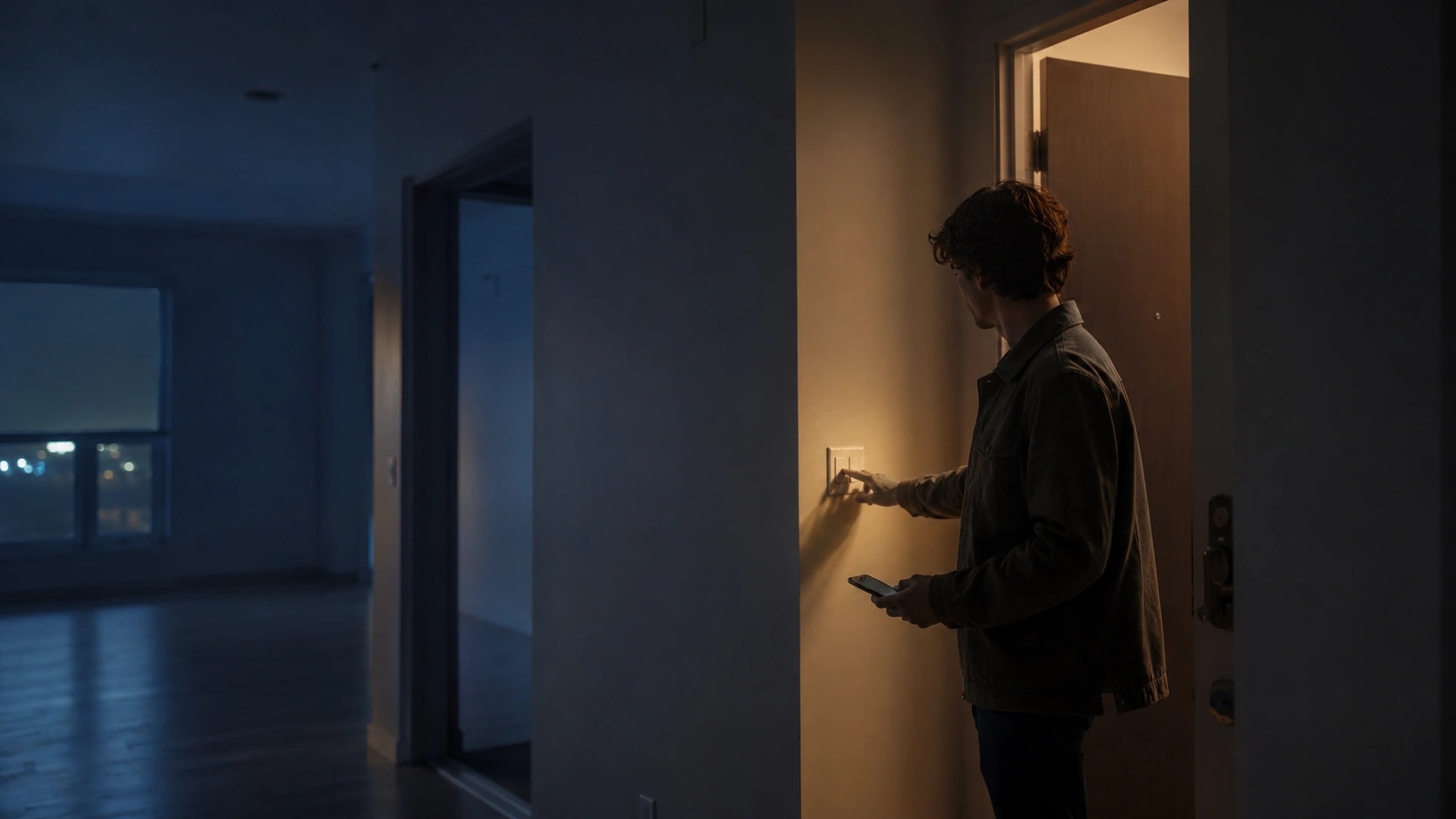
Neuroscientist Anil Seth calls perception "controlled hallucination." The brain constantly builds hypotheses about what is happening around us and compares them with signals from the senses. If the hypothesis matches the data, we see "reality." If not, the brain either changes the hypothesis or decides the data is wrong.
This process is called predictive coding. The brain is always one step ahead. When you open the refrigerator, you already "know" what is inside before the light hits your retina. If the brain processed every frame from scratch, we would not react to danger in time. Prediction is an evolutionary advantage. But every system has a cost of error.
How the Brain Tells "Mine" from "Other"
When you speak words to yourself, you do not confuse your inner voice with someone else's. Why? Because the brain sends a special signal - an efference copy, or corollary discharge. It is like a service note: "I just gave the command to speak, ignore the sound."
Research on people with schizophrenia showed that when trying to replicate finger pressure on themselves, healthy people consistently press weaker than through a joystick. Patients with schizophrenia press more accurately - because their brain does not send the efference copy, and the sensory signal does not weaken. A meta-analysis of 32 studies confirmed: self-monitoring is reduced in schizophrenia patients, especially in those who hear voices.
There is a second mechanism - reality monitoring. This is the brain's ability to determine: "Did I imagine this, or did it really happen?" The key zone is the medial anterior prefrontal cortex. A Cambridge University study showed that in healthy people without a specific sulcus in this zone (paracingulate sulcus) in both hemispheres, reality monitoring accuracy drops by 10-15%. In 44% of schizophrenia patients, this sulcus is absent in both hemispheres versus 27% in healthy controls.
So the ability to distinguish your own imagination from external reality is not a matter of "willpower" but a neurobiological function. And it can work worse in completely healthy people simply due to brain anatomy.
When the System Fails: Psychosis and Voices
Psychosis is not a diagnosis but a state. Its main feature is losing touch with reality. A person begins to perceive their own thoughts, memories, or inner voice as external signals.
Auditory verbal hallucinations (AVH) are the most common symptom of schizophrenia. They occur in 70% of patients. But here is the surprising part: studies showed that in the healthy population, the median prevalence of AVH is 13.2%. That means every seventh healthy person has heard voices at least once. In a Dutch study, over 10% of the population experienced recurring AVH, and 71% of them reported the voices were not purely negative, while 91% said it did not interfere with life.
Why are voices a disease for some and not for others? The key factor is belief in the voice. Research showed that distress from AVH is directly proportional to how real the person believes the voice is and how much control they feel over it. If you hear a voice but understand it is your brain playing tricks, that is one thing. If you are convinced it is the CIA, gods, or demons, that is another.
Two main mechanisms explain AVH:
The feed-forward model. When the brain generates inner speech, it should send an efference copy to the auditory cortex. If the copy does not arrive, the auditory cortex gets a signal without warning and perceives it as external. It is like pressing a light switch but getting no feedback - and deciding the light turned on by itself.
The aberrant memory model. Traumatic memories, especially from childhood, can activate out of context due to a failure in the prefrontal cortex inhibitory mechanisms. A person "hears" phrases from an abuser or parent not because someone is speaking, but because memory surfaces involuntarily. This model explains why voice content is often linked to past trauma.
Both models agree on one thing: in psychosis, the brain loses the ability to label internal processes as "mine." Inner monologue becomes "a voice from the street." A memory becomes "happening now." A prediction becomes "fact."
Real Cases: When the Inner World Kills
Theory is good, but numbers and names make the scale understandable. Here are several real cases where psychosis led to the death of innocent people.
Andreas Lubitz: 149 Victims in One Flight
On March 24, 2015, Germanwings flight 9525 co-pilot Andreas Lubitz intentionally crashed an Airbus A320 into the French Alps. There were 150 people on board, including himself. The investigation showed Lubitz had hidden his mental illness from the airline for years.
Nineteen days before the crash, a doctor diagnosed him with possible psychosis - a state with delusions and inability to distinguish reality from fantasy. A psychiatrist prescribed escitalopram, zolpidem, and mirtazapine. Lubitz searched the internet for suicide methods and information about cockpit door security. On the day of the crash, he wrote on a piece of paper: "Decision Sunday," "find the inner will to work and continue to live," "let myself go."
Lubitz was not a "villain" in the classic sense. He was a person whose brain lost the ability to distinguish his own thoughts from reality, and his own life from the lives of others. His psychosis does not excuse him. But it shows: when the reality monitoring mechanism breaks, consequences can be catastrophic.
John Hinckley: Assassinating a President for a Movie Star
On March 30, 1981, 25-year-old John Hinckley Jr. shot President Ronald Reagan outside the Hilton Hotel in Washington. Also wounded were a Secret Service agent, a police officer, and press secretary James Brady, who was left partially paralyzed.
Hinckley suffered from an obsession with actress Jodie Foster after the film "Taxi Driver." He wrote her letters, called her, stalked her. When he realized he would not get her attention, he decided to "do something grand" - kill the president to impress her.
At trial, psychiatrist William Carpenter diagnosed Hinckley with schizophrenia. According to him, Hinckley "blended" various characters from films and real life - Travis Bickle from "Taxi Driver," John Lennon - into a single delusion. A brain CT showed widened sulci - a sign found in one-third of schizophrenia patients but only 2% of healthy people. The jury found Hinckley not guilty by reason of insanity. He spent 35 years in a psychiatric hospital and was released in 2016.
Ed Gein: A Mother Who Would Not Die
Ed Gein is one of the most famous schizophrenia cases in US criminal history. In 1957, police found items made from human remains in his home: skulls used as bowls, masks made from face skin, a "woman suit" made of skin. He killed at least two women and robbed graves.
Gein grew up under a fanatical mother who taught him that all women except her were sinners. After her death in 1945, his psyche collapsed. He wanted to "become a woman" to literally get into his mother's skin. In 1968, a court found him not guilty by reason of insanity due to schizophrenia. He spent the rest of his life in psychiatric hospitals, where he was a model patient. He died in 1984 from heart and respiratory failure.
The Gein case shows how childhood trauma, isolation, and genetic predisposition can lead to a complete break from reality. His "woman suit" was not perversion but an attempt by the brain to solve an unsolvable problem: how to stay with a mother who died.
Ed Kemper: When Voices Say Kill
Edmund Kemper, known as the "Co-Ed Killer," murdered ten people, including his mother. His story began at age 15 when he shot his grandmother "to see what it felt like." He then killed his grandfather. Psychiatrists diagnosed paranoid schizophrenia and sent him to a hospital. He was released at age 21.
Kemper later killed six female hitchhikers, then his mother and her friend. After killing his mother, he called the police and surrendered. In interviews, he said voices commanded him to kill, but later admitted he often lied to investigators. His case is complex: schizophrenia intertwined with psychopathy and deep hatred for his mother.
Numbers That Matter More Than Names
Individual cases shock, but statistics give the real picture. A study of all convicted adult family homicide perpetrators in England and Wales from 1997 to 2008 showed: 34% had symptoms of mental illness at the time of the offense. Among them, 27% experienced psychosis symptoms - delusions, hallucinations, loss of reality contact. Among intimate partner homicide perpetrators, the figure is lower - 20% - but still significant.
Even more alarming data on matricide. A Green study in England showed: 74% of men who killed their mothers had a schizophrenia diagnosis. 70% experienced psychotic symptoms in the week before the killing. And the most frightening: 83% of them were receiving no treatment at the time of the offense.
This does not mean people with schizophrenia are dangerous. According to WHO, people with schizophrenia are more likely to be victims of violence than perpetrators. But when psychosis goes untreated, especially combined with trauma, isolation, and medication refusal, risk rises sharply.
The "Second Self": Dissociative Identity Disorder
There is a condition even stranger than schizophrenia. In dissociative identity disorder (DID), a person splits into several "personalities" that may not know about each other. This is not "split personality" from movies but a protective brain mechanism against extreme trauma.
The most famous case is Billy Milligan. In 1978 in the US, he was accused of serial rapes and robberies. Psychiatrists identified 24 different "personalities" - from artistic Ragen to little girl Kristen. The court found him not guilty by reason of insanity - the first such case in US history. Milligan became the prototype for the novel "The Minds of Billy Milligan."
Another case is Juanita Maxwell. In 1979, a hotel maid in Florida killed a guest. At trial, it turned out Maxwell had several personalities, and one of them - aggressive "Wanda" - committed the murder. The jury acquitted her.
But here is what matters: nearly half of DID patients show aggressive behavior. Yet courts generally do not accept DID as an insanity defense. Why? Because modern psychiatry considers DID extremely rare and controversial. Many researchers believe "personalities" are not separate entities but extreme forms of dissociation, where the brain breaks the link between memories, emotions, and behavior.
The point is that in both DID and schizophrenia, the brain loses the integrity of "self." It cannot say: "this is my thought," "this is my action," "this is my memory." And when "self" is shattered, moral brakes stop working.
Can You Rewire the Brain?
The user asked: can you influence thinking, change a person, or is everything built in childhood? The answer is yes, you can. And yes, childhood matters. And yes, the brain changes throughout life.
Neuroplasticity is the brain's ability to restructure itself, its functions, and connections in response to experience. Until the 1990s, the adult brain was thought to be static. Now we know: even at 70, the brain can form new neurons - neurogenesis occurs in the dentate gyrus of the hippocampus and the subventricular zone.
There are three types of neuroplasticity:
Structural plasticity. Physical changes in neurons: new dendrites, new synapses, even new neurons. Research showed that long-term meditators have a thicker posterior cingulate cortex - the area responsible for mindfulness.
Functional plasticity. Changes in existing network properties. When you learn a new language, the motor cortex reallocates resources. When you stop using a skill, connections weaken.
Synaptic plasticity. The rule "neurons that fire together, wire together." Every time you repeat a thought or action, the connection between participating neurons strengthens. This is the physical basis of habit.
What specifically works for the brain:
- Physical activity. 150 minutes of aerobic exercise per week raises BDNF levels - a protein Harvard researchers call "fertilizer for the brain." BDNF stimulates growth of new neurons and synapses.
- Sleep. During deep sleep, the brain clears toxic proteins through the glymphatic system. Chronic sleep deprivation increases psychosis risk.
- Nutrition. Mediterranean and MIND diets are linked to better brain health. Omega-3, antioxidants, flavonoids - building material for neurons.
- Learning. New skills - language, music, chess - create new neural networks. The more complex the task, the greater the restructuring.
- Social connections. Loneliness increases dementia risk by 40%. Regular social interaction stimulates the prefrontal cortex.
But there is an important nuance. Neuroplasticity works both ways. You can build healthy habits - and you can strengthen anxious patterns. If every day you spin catastrophic scenarios, you are literally paving a "highway" for anxiety in your brain. Changing thinking is possible, but it requires systematic work - just like building muscles.
Early Signs: How to Recognize Psychosis Months Before the Explosion
Psychosis rarely arrives suddenly. Months or years of warning signs precede it. According to the US National Institute of Mental Health, psychosis most often begins in late adolescence or the 20s-30s. Annually, psychosis develops in 15-100 people per 100,000.
Here are signs to watch for:
- Suspiciousness. A person begins to see hidden meaning in ordinary things. Neighbors are "spying," colleagues are "jealous," the TV is "sending signals."
- Difficulty concentrating. Thoughts scatter like beads from a broken string. A person starts a sentence and forgets what they were talking about.
- Social isolation. Sudden withdrawal from friends, family, hobbies. The person "buries" themselves inside.
- Sleep disruption. Insomnia or, conversely, hypersomnia. Insomnia is especially dangerous - it can trigger psychosis even in a healthy person.
- Unusual speech. Illogical jumps in conversation, creating new words, off-topic answers.
- Emotional flattening. The face becomes a mask, the voice monotone. The person stops reacting to joy or grief.
- Hallucinations. Voices that comment on actions or give commands. Visual images that are not there. Smells without a source.
The most important indicator is functional decline. A person stops coping with work, study, or daily life. If they used to be organized but now have not washed for weeks, that is a signal.
According to WHO, more than two-thirds of people with psychosis worldwide do not receive specialized care. In England and Wales, among adult family homicide perpetrators with psychosis, only a third had contact with psychiatric services in the year before the crime. 38% missed their last appointment. 26% were not taking medication.
Early intervention is key. Research shows: the earlier treatment begins, the better the prognosis. The first 2-5 years after psychosis onset is a "critical window" when the brain can still recover without irreversible changes.
What to Do When Reality Starts to Tear
If you notice signs of psychosis in yourself or a loved one, there are concrete steps. Do not wait for it to "pass on its own." Psychosis is not just "stress" but a medical condition requiring help.
Step 1. See a psychiatrist. Not a psychologist, not a therapist, but a psychiatrist. Only a doctor can prescribe antipsychotics that block excess dopamine - the neurotransmitter that "fuels" psychosis.
Step 2. Do not argue with delusions. If a loved one says they are being followed, do not try to convince them otherwise. For them, this is reality. Better to say: "I understand you are scared. Let's see a doctor together who can help figure this out."
Step 3. Ensure safety. If the person is aggressive, hears commands for violence, or threatens themselves - call emergency psychiatric services. Most countries have crisis lines and mobile psychiatric teams.
Step 4. Monitor medication. Non-adherence is the main cause of relapse. Depot forms of antipsychotics (injections every 2-4 weeks) help if a person forgets or deliberately refuses pills.
Step 5. Reduce stress. Stress is a psychosis trigger. Regular sleep, avoiding cannabis and alcohol, and a calm environment are mandatory. Cannabis is especially dangerous: WHO directly points to the link between heavy cannabis use and increased schizophrenia risk.
Step 6. Build a support system. Family psychoeducational therapy reduces relapse risk by 20-50%. When loved ones understand what psychosis is, they stop blaming and start helping.
Step 7. Do not lose hope. According to WHO, at least every third person with schizophrenia fully recovers. Many live full lives: work, start families, achieve goals. Psychosis is not a sentence. It is a condition that can be controlled.
And one last thing. If you are reading this article and thinking: "Maybe I am going crazy too?" - chances are, you are not. People in psychosis rarely ask this question. They are convinced they are right. The ability to doubt your own perception is a sign of healthy reality monitoring. Value it.