Your favorite streamer screams with joy. A slot machine just paid out on screen. You didn't bet a cent, but something in your chest jumps as if you'd won. That's not a coincidence but a specific brain mechanism, and the betting industry pays good money to trigger it in you.
Casino and sports betting ads now show up in creator content more often than ads for headphones or food delivery. The reason is simple: gambling advertisers don't pay per click. They pay a cut of what you lose. And that cut has no ceiling.
Why gambling ads took over creator content
A typical advertiser pays a creator a flat fee per mention. Casinos and sportsbooks work differently, through revenue share deals. A streamer earns a percentage of what a referred viewer loses, commonly 20-50% of the house edge, the built-in mathematical advantage the casino holds over the player. Some operators also pay top streamers flat six-figure sponsorships per season on top of that.
A shoe brand profits from you once. A casino is built to profit from you for years. That's the entire reason gambling has the deepest ad budget in the creator economy: there's simply more to share.
What happens in the brain during a near-miss
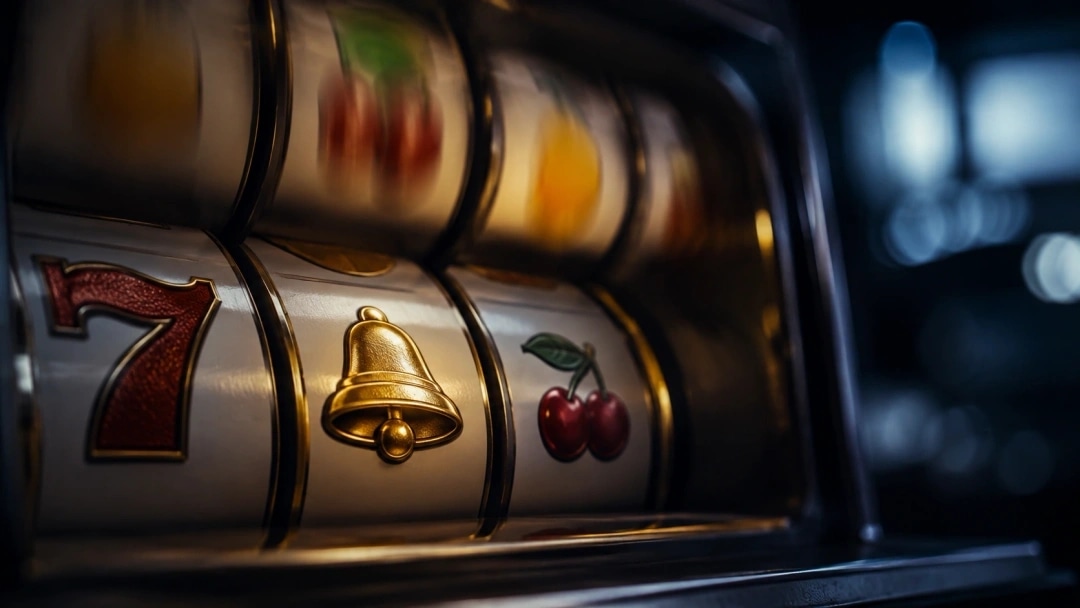
The slot reel stops one symbol short of the jackpot. Technically, that's a loss. The brain treats it differently.
Researchers at Cambridge and the University of British Columbia scanned gamblers' brains with fMRI during these "near-miss" moments. In people with strong gambling urges, a near-miss activated the same brain reward regions as an actual win, even though no money changed hands. A separate study found that the more severe a person's gambling problem, the stronger their midbrain dopamine system reacts specifically to near-misses, not to real wins.
Dopamine isn't the "pleasure chemical" it's often called. It's closer to a signal that says "pay attention, a reward might be here, try again." A near-miss fools that system into reading "you were close" when, in fact, you simply lost the bet.
There's a second layer to this: stress. Research on daily cortisol (the body's main stress hormone) in problem gamblers found that lower morning cortisol levels predicted riskier in-game decisions. After a big loss, stress spikes, and the fastest way to bring it down is another bet. The loop closes itself: stress pushes you to play, playing briefly relieves the stress, and the next loss brings the stress back with interest.
Loss chasing is the real warning sign
Gambling researchers call this loss chasing: betting again not because you believe in luck, but because you've already put money in and want it back. Studies identify chasing as one of the clearest markers of the shift from casual play to gambling disorder.
Signs that a habit has crossed into a problem:
- You bet more than you planned and can't stop on time
- A loss triggers an immediate urge to bet again, not sadness
- You borrow money or sell things to fund another bet
- Thoughts about gambling intrude even while you're doing something else
- You hide how much time or money you spend on betting from people close to you
"Don't gamble, guys": why streamers warn you about their own product
Many casino streamers end a session with a line like "gambling is bad, don't copy me." On the surface, that sounds like care. It's actually a known marketing move called a damaging admission.
Viewers already know a streamer profits from their money, so their guard is up by default. But when someone openly calls their own product harmful, that guard drops for a moment: if he's honest about this, maybe he's honest about the wins too. It runs on the same mechanism as BMW's famous "Don't trust advertising" campaign line, a paradoxical admission that raises trust in everything said afterward.
Add psychological reactance to the mix: the natural urge to do exactly what you're told not to do when you feel your freedom of choice is being restricted. A "don't do what I do" from someone in expensive gear reads to a younger viewer less like a warning and more like an exclusive club: he made it, so I can too.
Gambling for kids: loot boxes and blind boxes
Adults aren't the only audience for this mechanic. It's built into games rated 3+ through loot boxes, paid "chests" with randomized contents.
A survey of over 1,000 UK adults found that for 20% of gamblers, loot boxes in video games were their first exposure to gambling, not a casino. A separate large study of 16-24 year-olds found that people who spend their own money on loot boxes are 11.4 times more likely to show signs of problem gambling than those who don't. That link is roughly as strong as the one between problem gambling and playing real online casino games or slots. The UK Gambling Commission estimated that 31% of children aged 11-16 have opened a loot box at least once.
The mechanic is the same as a slot machine: bright animation, sound, an element of chance, the urge to try once more. The one difference is that a kids' game usually has no "cash out" button. A child spends but never wins real money back. They just get used to the ritual of opening a random reward.
The same mechanic has recently spread beyond games into blind boxes and collectible figures, bought by adults as much as kids. The principle is identical to a loot box: you pay for a sealed box and a second of anticipation, not for a specific item.
What to do if gambling ads keep pulling you in
Betting ads aren't going away, there's too much money riding on them for the industry to stop. But you can cut their pull on you.
- Unfollow or mute channels where casino content is a regular part of the stream
- If you catch yourself thinking "maybe I could win too" after watching someone else's payout, that's the mirror-neuron hook talking, not financial advice
- Set a spending limit before you play, and physically remove access to the rest of your money on that card
- If you notice the loss-chasing signs above in yourself, that's a reason to ask for help, not to "just get a grip" alone
Frequently asked questions
Why do streamers advertise casinos so often?
Casinos and sportsbooks pay streamers a percentage of what referred viewers lose, typically 20-50% of the house edge, instead of a one-time flat fee like most advertisers. The longer a viewer keeps playing, the more the streamer earns.
What is the near-miss effect?
It's when a bet technically loses but the outcome looks close to a win, like a slot reel stopping right beside the jackpot symbol. fMRI studies show that in people prone to gambling, this moment activates brain reward regions almost like a real win, even though no money is paid out.
Are loot boxes in video games actually gambling?
Not legally in most places, mainly because you usually can't cash them out for money. But structurally (chance, money at stake, a bright reward animation) they closely resemble gambling, and research links buying them to a much higher risk of problem gambling.
Why does a loss make you want to bet again right away?
It's called loss chasing. A loss raises stress hormone levels, and a new bet briefly lowers them. The brain starts treating gambling as a way to manage anxiety rather than a way to make money.
Does a streamer's "gambling is bad, don't do it" warning mean anything?
Not as a warning, since it's usually followed by content that makes gambling look exciting. As a marketing tactic, yes: openly admitting a product's flaw raises viewer trust in everything the streamer says afterward, including the moments they show a win.
Sources
- Clark et al., Gambling Near-Misses Enhance Motivation to Gamble and Recruit Win-Related Brain Circuitry, Neuron
- Amplified Striatal Responses to Near-Miss Outcomes in Pathological Gamblers, Neuropsychopharmacology
- Zendle & Cairns, Adolescents and loot boxes: links with problem gambling and motivations for purchase, Royal Society Open Science
- Loot boxes are again linked to problem gambling: results of a replication study, PLOS One
- Diurnal cortisol and decision making under risk in problem gambling
- Chasing among older-aged gamblers: the role of mentalizing and psychological distress
- How gambling affects the brain and who is most vulnerable to addiction, American Psychological Association
- Casino Affiliate Programs: Complete 2026 Operator Guide, Track360