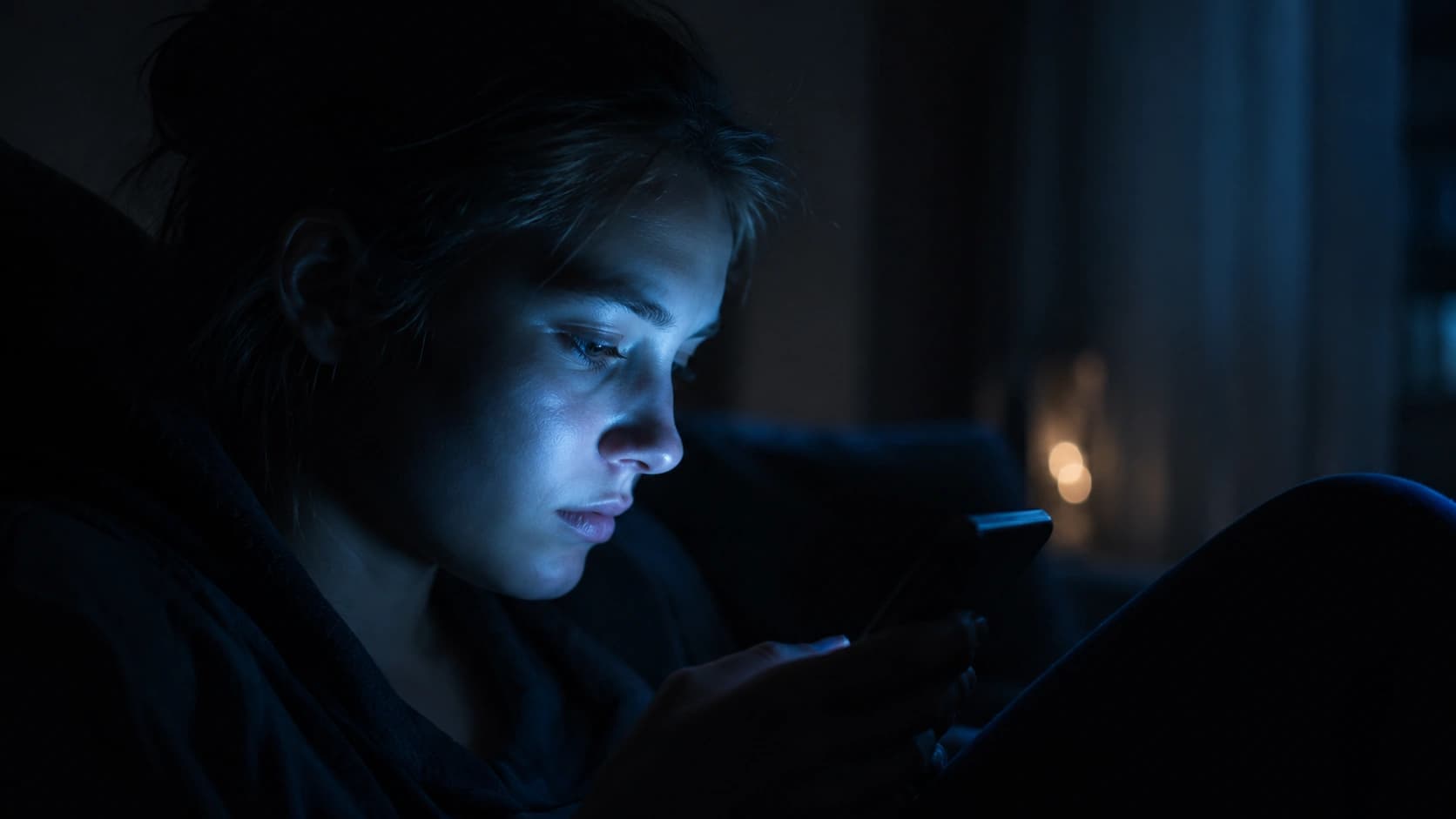
Dopamine loop
A closed cycle of cue, action and reward that keeps you scrolling: the brain anticipates the reward more strongly than it enjoys it, so it reaches for the next hit.
Dopamine is not the pleasure molecule, however often it gets called that. It handles "go and get it": it rises in anticipation of a reward and drops below baseline when the reward turns out worse than expected. Pleasure itself is produced by other systems. That is why an hour in a feed leaves you hollow rather than happy — the part that pulls fired, the part that satisfies did not.
The loop closes like this: a cue (a notification, boredom, a free hand), an action (open it), and a reward you could not know was coming. Unpredictability is the load-bearing element. Dopamine neurons respond more strongly to an unexpected reward than to a guaranteed one, and over time they begin firing at the cue rather than the reward. What becomes charged is not the content but the gesture of unlocking the screen.
Slot machines run on exactly this mechanism — and so does learning anything worthwhile. Training, a language, a craft all move through the same cycle. The difference is not in how the loop is built but in what it leaves behind when it closes.
Why the feed will not let go
- The reward is unpredictable — what holds your thumb is the not-knowing, not the quality of the content.
- The cue is cheap: one thumb movement between wanting and doing, with no pause in between.
- Anticipation outweighs receipt — after an hour of scrolling most people cannot name a single thing they saw.
- Boredom itself became a cue: a lull in conversation or a queue sends your hand to your pocket with no conscious decision involved.
- The loop learns — the more often it closes, the less it takes to start it again.
Commonly confused with
With addiction. The loop is a learning mechanism, harmless in itself, and it runs identically on a feed and on a guitar. Addiction is the word for a cycle that continues despite damage the person can already see, while attempts to stop keep failing. The distinction is not the screen or the substance but whether the option to walk away still exists.
Common questions
Not in the form it is usually sold. You cannot lower dopamine on purpose: it is involved in movement, motivation and learning, and the body does not switch it off for the weekend. What does work under that name is a break from the unpredictable-reward activities, after which ordinary things stop feeling flat by comparison.
No. It rises before the reward rather than after it, and falls when the reward disappoints. Pleasure is handled by other systems. The nickname survives in popular writing while explaining the opposite of what dopamine actually does.
Aim at the cue, not at willpower. Turn off notifications, move the app off the first screen, leave the phone in another room — each one adds seconds between the wanting and the gesture, and the loop depends on there being none.