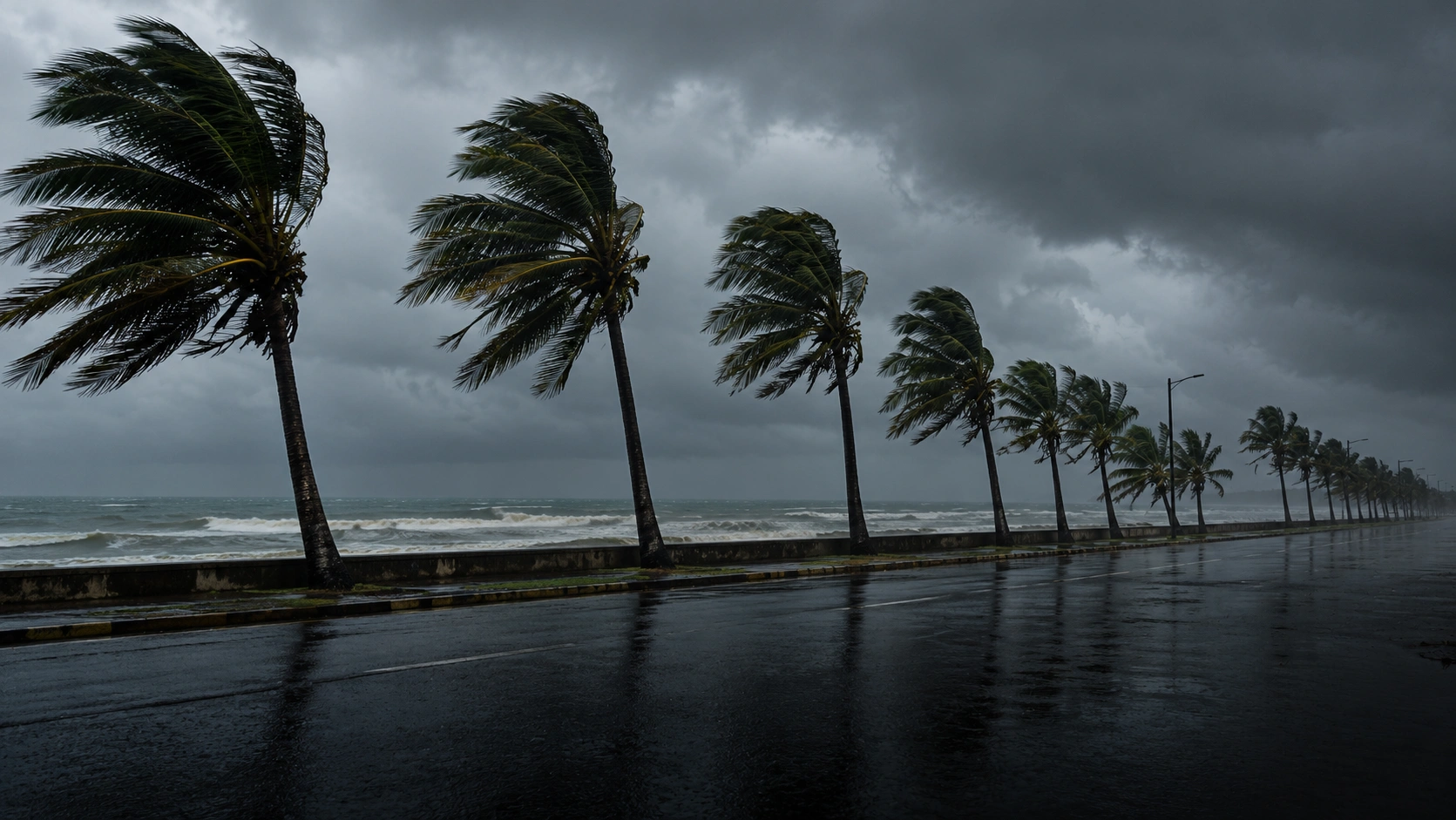
Cyclone Arnab made landfall in India's Andhra Pradesh state on 28 October. At least 180,000 people were evacuated beforehand and at least three died. In 1999 a cyclone that struck the neighbouring coast of Odisha killed almost 9,900 people.
What is known about Arnab as of 29 October
The India Meteorological Department classed Arnab as a very severe cyclonic storm, the third-highest category on its scale, and downgraded it to a severe storm after landfall. Winds reached 135 km/h, and the storm surge was forecast at up to 1.5 metres above the tide. Authorities put the number of people in the storm's path at more than 12 million.
The figures are still moving. Evacuations across Andhra Pradesh and Odisha are put at 180,000 or more, while early reports said 89,000. A National Disaster Response Force official reported three deaths, and the Andhra chief minister's office said two were caused by a falling tree and electrocution. In a letter to the federal home minister, the chief minister wrote that at least 180 houses were destroyed.
What happened in 1999
The Odisha super cyclone of 29 October 1999 was far stronger, with sustained winds of up to 260 km/h. The India Meteorological Department counted 9,887 deaths officially, the EM-DAT database lists 10,915, and some estimates run as high as 30,000.
About 150,000 people living within 10 km of the coast in five districts were evacuated then. There were only 23 permanent cyclone shelters. The first track forecast was uncertain, and the storm did not move inland but stalled over the coast for almost two days.
What has changed since
Odisha has built more than 800 multipurpose shelters, sirens now cover over 1,200 coastal villages, and the state set up a disaster management authority before the national one was created in 2005. Residents take part in drills.
The later storms show the result. Cyclone Phailin in 2013 killed 44 people in Odisha, and the World Bank said the state moved close to a million people to shelters. For Cyclone Fani in 2019, more than 1.2 million were evacuated, with an alert 66 hours before landfall and a warning 36 hours before. Sources give different death tolls: 64 according to PreventionWeb and 20 according to the New York Times.
These comparisons need caveats. Arnab was weaker than the 1999 storm (135 versus 260 km/h), so its low toll cannot be credited to evacuation alone. And the shelter and siren system described here is Odisha's experience, while Arnab struck Andhra Pradesh.
Where global warming comes in
The IPCC's sixth assessment report judges it likely that the global share of the strongest tropical cyclones (categories 3 to 5) has grown over the past 40 years, and that rapid intensification has become more frequent. That is a conclusion about many storms, not about Arnab. It is too early to say that warming strengthened this particular storm: scientific groups make such attributions later and separately.
Editorial opinion: the biggest change since 1999 is not that storms have got weaker but that people now have time to get out. A forecast, an alert, a shelter a few kilometres away and a habit of obeying evacuation orders make a difference of hundreds of times in the number of victims. That is what is worth copying in places that have not yet seen such storms.