For informational purposes only. This article does not replace professional medical advice and is not intended for self-diagnosis or self-treatment. Consult a qualified healthcare provider before making health-related decisions.
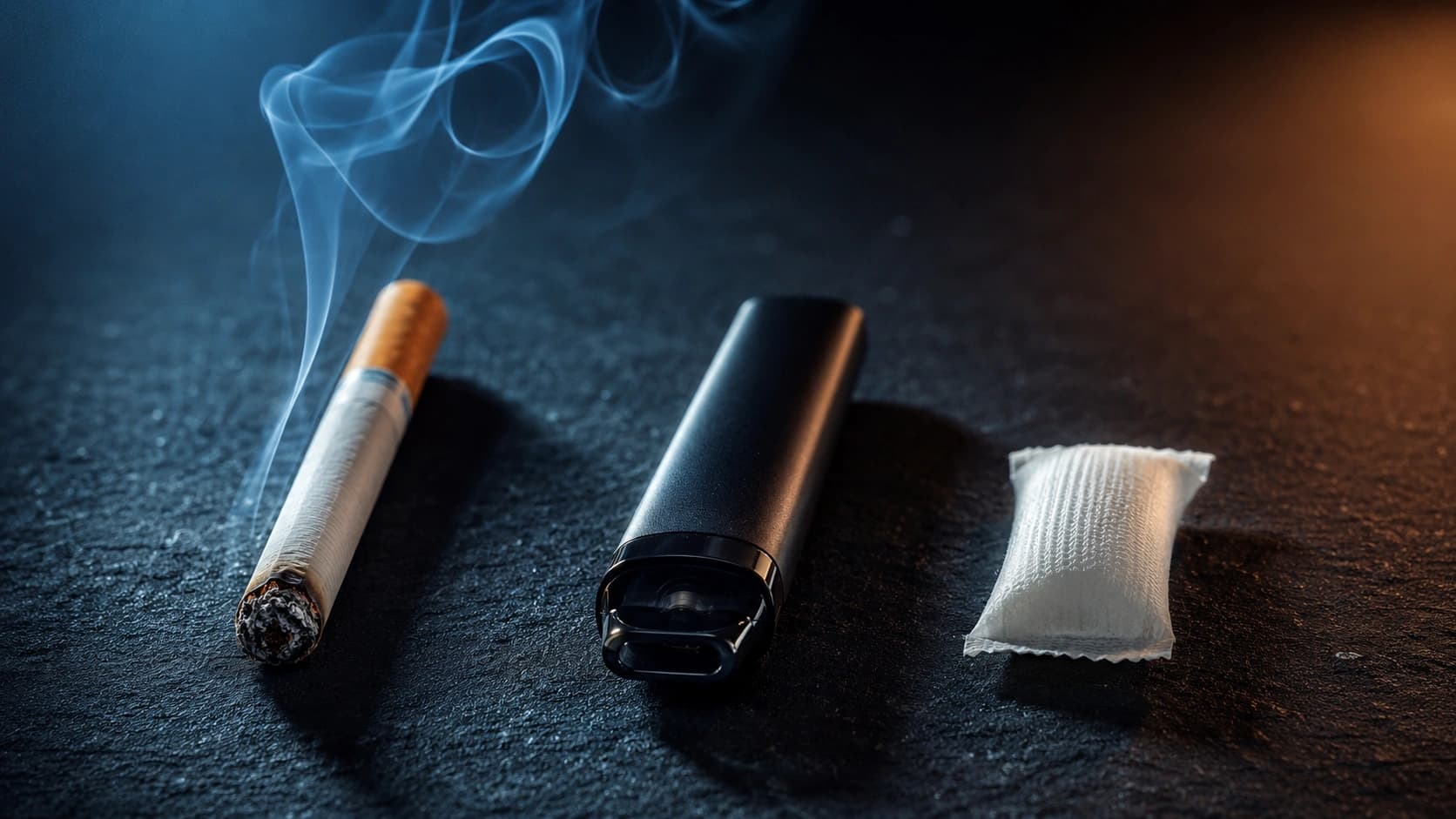
A pouch the size of a fingernail goes under the lip, and a few minutes later the familiar buzz arrives. No smoke, no smell, no tobacco. That is why many people assume nicotine pouches like ZYN are close to harmless. The short answer: they are much cleaner than cigarettes, but they are not safe. The nicotine is the same, and so is the addiction. For teenagers and small children, the risk is bigger than most people think.
Here is what is inside a pouch, what the research actually shows, and what nobody knows yet. Plus the most worrying finding, which has nothing to do with the people using them.
What is a nicotine pouch?
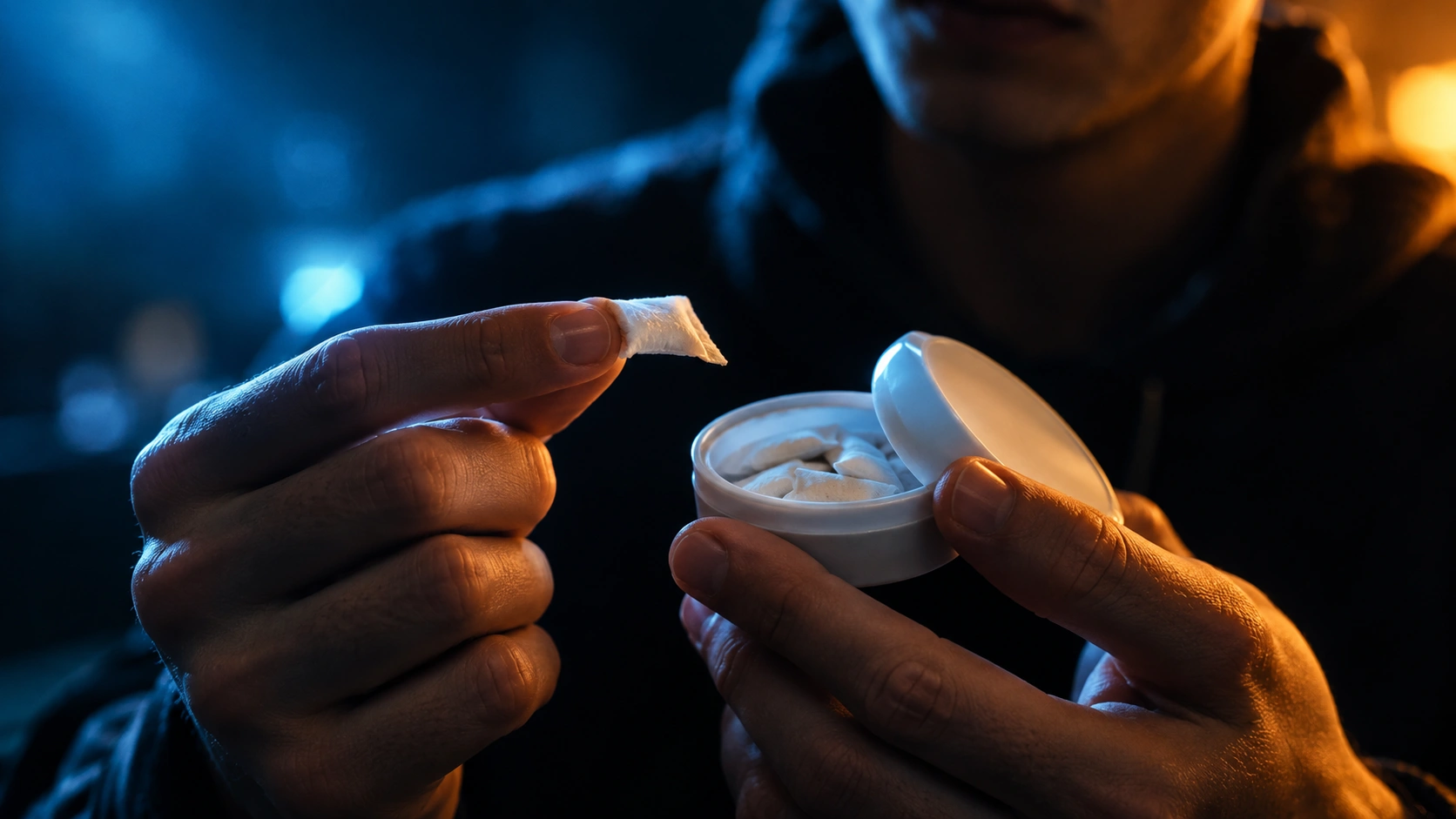
A nicotine pouch is a small white bag of plant fiber with nicotine, flavorings and sweeteners. There is no tobacco leaf inside. Traditional Swedish snus looks similar but contains ground tobacco.
Nicotine passes through the lining of your mouth straight into the blood, skipping the lungs. To speed this up, makers keep the filling alkaline. A 2025 review in Frontiers in Public Health found a median pH (a scale of acidity where plain water is 7) of 8.8. Think of it as an accelerator: the same nicotine reaches the brain faster.
Pouches taste like mint, berries or bubble gum. That sounds like a small detail. It is not, and we will come back to it.
How much nicotine is in one pouch?
The range is huge: from 1 to 47 mg per pouch, according to the same 2025 review. One lab test of 46 products from 20 brands found a median of about 9.5 mg. For comparison, a cigarette holds about 10-12 mg of nicotine, and a smoker absorbs only 1-2 mg of it.
The World Health Organization (WHO) noted in its 2026 report that some brands label products like game levels: "beginner", "advanced" and "expert", with up to 150 mg listed. You start easy and level up. The thing that levels up is the dependence.
In real life, a person who never smoked can move from the weakest can to a strong one within a month and barely notice needing a pouch every couple of hours.
What pouches do to your body
The main harm comes from nicotine itself. With no smoke, there is almost no tar or carbon monoxide (a gas that steals oxygen from your blood). But nicotine acts on the heart and blood vessels no matter how it gets in.
- Heart and blood pressure. Pulse and blood pressure rise right after use. WHO states plainly that nicotine raises cardiovascular risk.
- Mouth and gums. A pouch sits in one spot for a long time and irritates the lining. Lab tests showed inflammation in cells that varied by brand, possibly because of flavorings.
- Contaminants. Some products contained nitrosamines (cancer-linked chemicals formed from nicotine), formaldehyde and chromium, though at far lower levels than cigarettes.
- Beginner side effects. Dizziness, nausea and a burning mouth are common with strong pouches.
That sounds mild next to lung cancer. But pouches have been sold widely for less than ten years. No study has followed users for 20 or 30 years. "No harm found" often means "not studied long enough".
Do nicotine pouches help you quit smoking?
The evidence is thin. In October 2025, Cochrane (an international network that reviews all studies on a question) published a review. It found only 4 studies with 284 smokers, the longest lasting 8 weeks.
- It is unclear whether pouches help people quit better than no support.
- One small study suggests e-cigarettes may help more people quit than pouches.
- People who switched had lower levels of a tobacco carcinogen marker in their bodies. Good sign, but not proof of long-term benefit.
- The authors rated their confidence as low to very low.
For a smoker, fully switching is probably better than smoking. But proven tools like the patch, nicotine gum or a doctor's help are studied far better. For a non-smoker, a pouch is not a "lesser evil". It is a brand new addiction. And that is where the real problem starts.
Why teens get hooked faster
In May 2026, WHO released its first global report on nicotine pouches. Its message was blunt: brands target young people through influencers and social media, and some packaging copies candy. Flavors include gummy bears, bubble gum and mojito.
Data from different countries tell the same story:
- Worldwide: more than 23 billion pouches sold in 2024, up over 50% from the year before (WHO, 2026).
- United States: pouches are the second most used nicotine product among students after vapes. 1.8% of middle and high schoolers use them, about 480,000 kids, and 85.6% of them pick flavored ones (CDC, 2024).
- Great Britain: use among 16-24-year-olds jumped from 0.7% in 2022 to 4% in 2025, and to about 7.5% among young men (The Lancet Public Health). Roughly one in six users had never smoked regularly.
- Kazakhstan and Russia: no recent public data on pouches exists. That does not mean there is no problem, only that nobody has measured it yet.
Why does this matter? The brain keeps developing until about age 25. WHO says nicotine at this age affects attention and learning, and raises the chance of moving on to other nicotine products. An addiction that starts at 15 usually lasts longer than one that starts at 30.
Still, the most alarming finding is not about teens. It is about people who never chose nicotine at all.
Why a can of pouches is dangerous for small kids
A toddler sees a bright tin that smells like mint or berries and puts a pouch in their mouth. A 2025 study in Pediatrics, based on US poison center data, found that cases of children under 6 swallowing nicotine pouches rose 763% from 2020 to 2023. Most children were under 2, and almost all cases happened at home.
Pouches turned out to be riskier than other nicotine products: 1.5 times more likely to cause serious outcomes and twice as likely to lead to a hospital stay as nicotine gum or vape liquid. For a child weighing 10 kg, a strong pouch can cause vomiting, paleness and severe weakness.
If a child swallows a pouch, call emergency services or poison control right away, even before symptoms appear. Do not try to make the child vomit.
What to do if you already use pouches
- Check the strength. The milligram number on the can is your baseline. Moving to a weaker can is the first step down.
- Count your pouches. Many people are surprised by their real daily number.
- Do not keep a pouch in longer than recommended, and switch sides so your gums get a break.
- If you want to quit, ask a doctor about nicotine replacement: a patch gives a steady dose without the flavor and the ritual.
- Store the can like medicine: closed and out of reach of kids and pets.
Want the bigger picture? Read Is there a safe form of nicotine. And if your pouch comes with an energy drink, see what the can actually does to your body.
The 30-second summary
A smokeless pouch really is cleaner than a cigarette. But it is still nicotine: it speeds up your heart, builds addiction and hits teens and small children hardest. Its value for quitting smoking is not proven yet.
Do one thing right now: pick up your can and read the milligram number. It says more about your habit than any ad.
Sources
- WHO: nicotine pouch brands targeting youth as sales surge (2026)
- Cochrane: benefits and risks of oral nicotine pouches for quitting (2025)
- Al-Otaibi, Althobiani. Nicotine pouches: a narrative review, Frontiers in Public Health (2025)
- CDC MMWR: e-cigarette and nicotine pouch use among US students (2024)
- ScienceAlert on the Pediatrics study of child poisonings (2025)
- Summary of The Lancet Public Health study on pouch use in Great Britain (2025)
- King's College London: nicotine pouch use in Great Britain (2025)