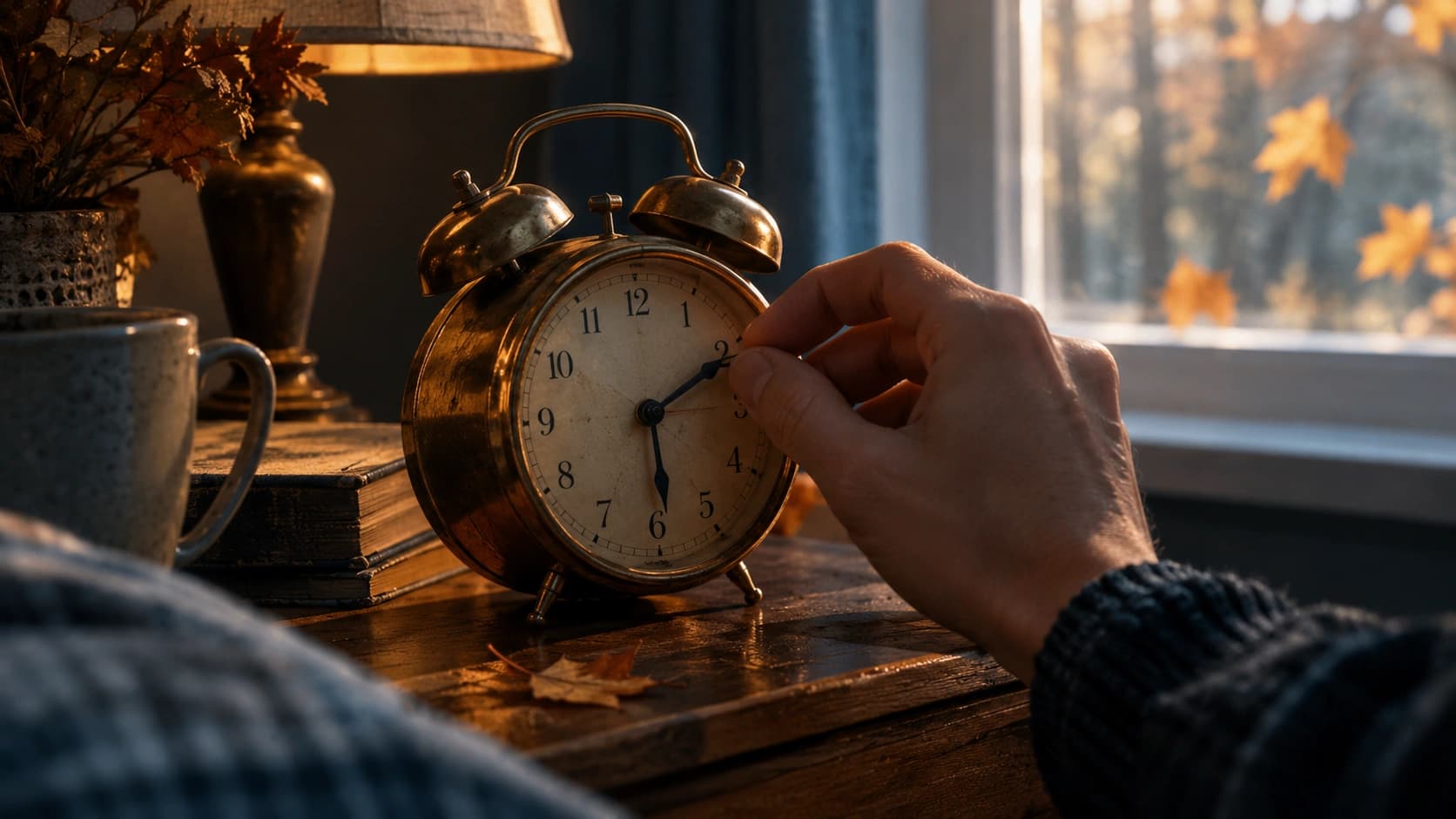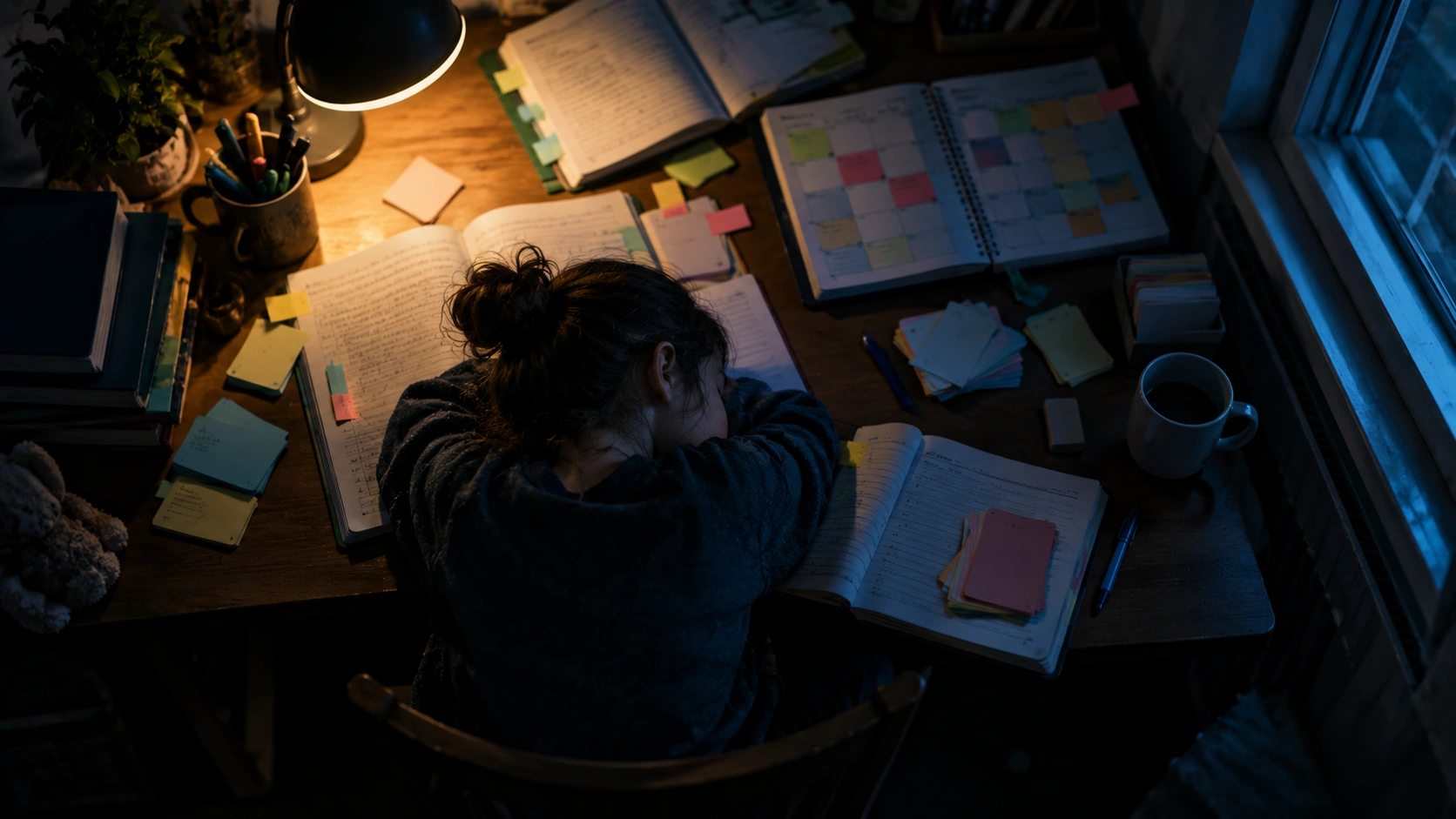
8 p.m. A ten-year-old just got back from an English class. Math homework is waiting, and tomorrow there's robotics after school. There's simply no time to play outside. Many parents feel their own childhood was freer. It isn't nostalgia: research shows children now spend more time on structured learning and far less time free. The drivers include the race for grades, the tutoring industry, parental anxiety and screens. And results aren't improving.
Here's what changed, why it's happening worldwide and what it means for an ordinary family. Plus why the country that tried to ban extra schooling by law got a surprising result.
What changed: less freedom, more school
The biggest shift isn't in textbooks. It's in how much unsupervised time kids have. In 2023, psychologists Peter Gray (Boston College), David Lancy and David Bjorklund reviewed half a century of data on US children in The Journal of Pediatrics. The picture:
- from 1950 to 2010, the US school year grew by 5 weeks;
- homework, once rare in elementary school, is now common even in kindergarten;
- by 2014, average elementary recess was about 27 minutes a day, and some schools had none;
- kids walk to school with friends and play outside far less than before.
Think of it this way: childhood used to be a big backyard with adults watching from the window. Now it's a train timetable, with every minute scheduled and a supervisor for each stop.
But why all the scheduling? To understand that, look at parents, not kids.
Why kids are overloaded: a race nobody wants to lose
Short answer: parents fear that without extra classes their child will lose the competition for good schools, universities and jobs. When everyone thinks that way, nobody can stop.
"Shadow education" shows it best. That's what researchers call paid tutoring and prep classes running alongside school. UNESCO (2025) estimates the global private tutoring market at $159 billion in 2023, possibly reaching $288 billion by 2030. Country by country:
- Greece: 70% of final-year students attend tutoring centers;
- Chile: 23% of 8th graders get math tutoring;
- South Korea: 82% of elementary students had extra classes in 2018;
- Egypt: 72% of final-year students have one-to-one tutoring.
Reliable numbers are scarce: when UNESCO asked, nearly 70% of countries couldn't provide any tutoring data.
It works like a stadium: one person stands up to see better, then everyone stands. Now everyone is uncomfortable and nobody sees more. But at least results improved, right?
More classes, less learning?
No, results didn't improve. In 2022, the PISA test (an international exam that checks how well 15-year-olds can use math, reading and science in real life) showed declines almost everywhere. According to the University of Jyväskylä, which runs PISA in Finland:
- math scores fell in 41 countries, 35 of them in the OECD (a group of mostly developed economies);
- reading dropped in most participating countries;
- even Finland, long a model system, lost 64 points in math compared with 2006.
Part of this is the pandemic: schools closed, and students who were already struggling were hit hardest. But Finnish researchers say there's no easy explanation. They point to a growing gap between strong and weak students and to phones in class: 41% of Finnish students said digital devices distract them in lessons, versus 31% on average across the OECD.
More classes, less attention. And here's where it gets worrying.
What overload does to a child's mental health
The Journal of Pediatrics authors argue that the loss of free play is a major cause of rising anxiety and depression in kids. Their reasoning:
- Independent play, without adults and by their own rules, makes children happy right away.
- It also builds coping skills: negotiating with friends, taking a small risk like climbing a tree, handling failure.
- Without that experience, kids have fewer inner tools against stress.
The authors also name fear of academic failure as a direct source of stress. In 2021, child and adolescent mental health in the US was declared a national emergency.
An honest caveat: this is a review, not an experiment. It shows that freedom went down while anxiety went up, but it can't prove one caused the other. Other researchers point to social media and pandemic isolation. Most likely, it's all of these together.
Bjorklund put it this way:
The crisis "has crept up on us gradually, over decades," coming from "good intentions carried too far."
- David Bjorklund, psychology professor, Florida Atlantic University, 2023, FAU
How countries are trying to fix it
Governments have noticed, but nobody has found a simple fix.
China banned tutoring. In July 2021, its "double reduction" policy outlawed for-profit tutoring in school subjects. The results are mixed. Economists writing on VoxChina in 2025 estimate that over 3 million job openings disappeared in four months and tax losses passed 11 billion yuan in 18 months. Even art and sports classes, which weren't targeted, shrank. UNESCO, drawing on South Korea's experience, warns that bans often push tutoring underground rather than end it.
Phones are leaving classrooms. In June 2023, fewer than one in four countries banned smartphones in schools. According to the team behind UNESCO's Global Education Monitoring Report, by March 2026, 114 education systems had a national ban, or 58% of countries. Whether bans improve learning isn't proven yet. We covered a similar story in why under-16 social media bans barely worked.
Editor's view: China's experience shows you can't stop the race with a ban while university places and jobs depend on grades alone. Families can change less than governments, but they can change something.
What parents can do
You don't need to drop every activity. You need to give back some time nobody plans:
- Look at the schedule through your child's eyes. How many hours a week have no classes, no clubs and no screens?
- Keep one activity your child chose, not one picked "just in case" for college.
- Give small, age-appropriate independence: walking to the store, arranging a meetup with a friend.
- Watch for signs of overload: constant tiredness, morning stomachaches or headaches, tears before school.
If a child is sad or anxious for months, see a professional rather than adding another class.
Back to 8 p.m. Today, open the calendar and cross out one activity this week. In its place, write one hour with nothing planned. Let your child decide what to do with it.
Sources
- FAU on Gray, Lancy, Bjorklund in The Journal of Pediatrics (2023)
- UNESCO, Mark Bray: private supplementary tutoring (2025)
- UNESCO World Education Blog: tutoring as a global phenomenon
- University of Jyväskylä: PISA 2022 results
- VoxChina: the economic toll of China's tutoring ban (2025)
- Teacher Magazine on UNESCO's technology in education report (2023)
- The Hitavada: phone bans in 58% of countries (2026)