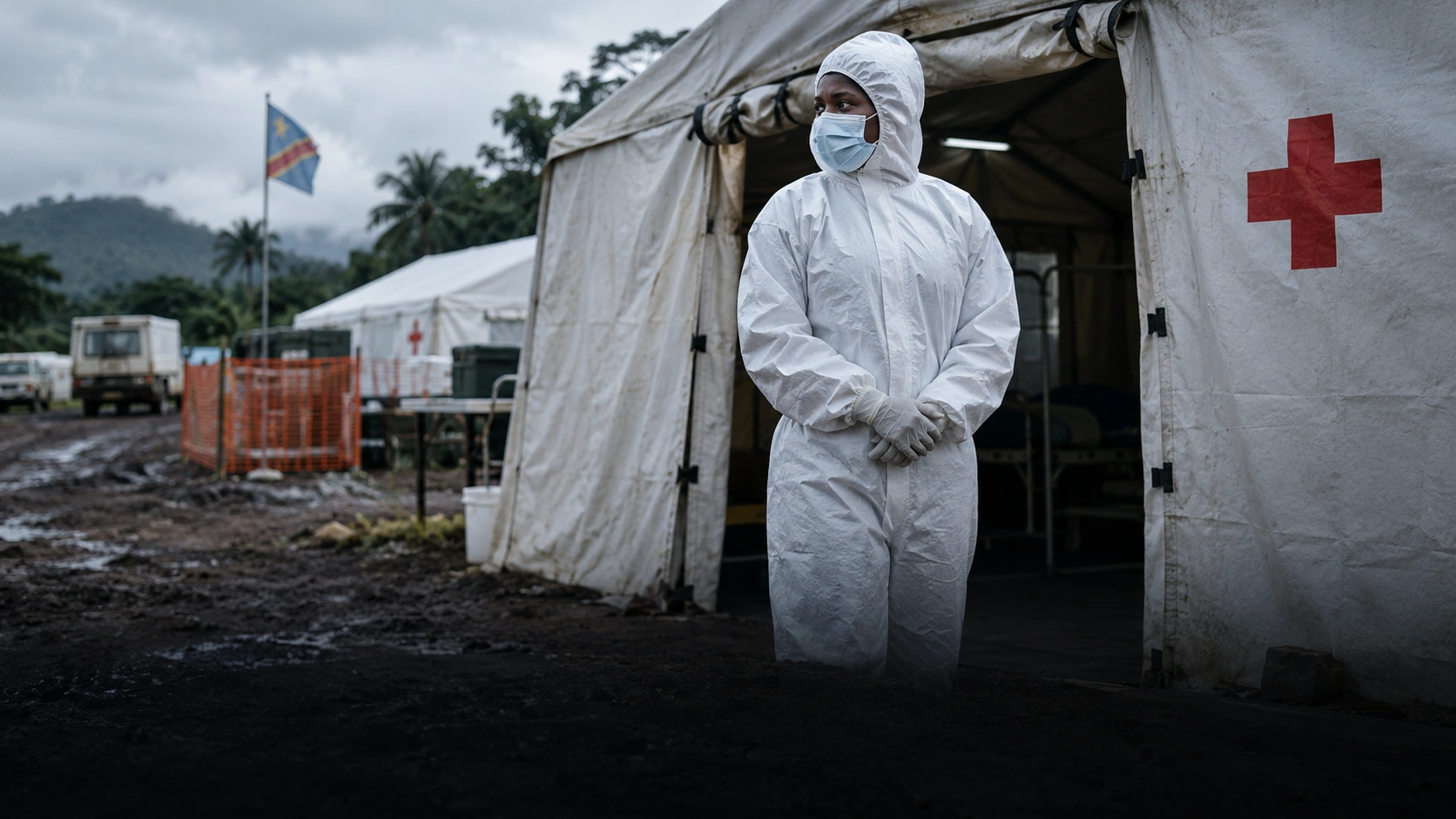
The Ebola outbreak caused by Bundibugyo virus in the Democratic Republic of the Congo has passed 10,000 confirmed cases: ECDC counts 10,193 as of 28 October. WHO reported 4,687 deaths as of 20 October. There is no approved vaccine or specific treatment for this virus.
What is known as of 29 October
WHO published its latest update on 23 October. As of 20 October, it counts 9,704 confirmed cases in 66 health zones across eight provinces, with 2,595 people recovered. The crude case fatality rate is 48.3%.
ECDC puts the total at 10,060 cases and 4,887 deaths as of 25 October. Ituri is the worst-hit province with 7,211 cases. Comparing the two reports gives roughly 70 new cases a day. That is our own estimate from two different sources, so treat it as approximate.
Few cases have been reported outside Congo:
- Kenya: nine cases. The first, imported, was confirmed on 6 October and the other eight are linked to it. WHO reports one death, ECDC two: the sources disagree.
- Nigeria: one imported case in Abuja on 20 October. The patient was medically evacuated to Switzerland, and 44 contacts were being monitored.
- Uganda: its own outbreak (20 cases, 2 deaths) was declared over on 27 August.
How this virus differs from the Ebola you may remember
Several different viruses cause Ebola disease, and Bundibugyo is one of them. The licensed Ervebo vaccine is not approved for it. WHO and its SAGE advisory group propose using Ervebo only within a research protocol, and Congo began vaccinating frontline workers with it in Kisangani on 27 August. On 23 October a Phase 2/3 trial called TUMAINI launched in Bunia, and it includes Ervebo.
Earlier Bundibugyo outbreaks were less deadly: a 30% fatality rate in Uganda in 2007 and 50% in Congo in 2012. The current 48.3% is close to the second, but the scale is not comparable.
The virus spreads through the blood and body fluids of a sick person or contaminated surfaces. The incubation period is 2 to 21 days, and a person is not infectious until symptoms appear. WHO says spread is amplified in health facilities with inadequate infection control and by unsafe burials.
What it means for you
ECDC rates the risk of infection for people living in the EU as very low, and the likelihood of sustained transmission after an imported case as very low too. WHO advises against restricting travel or trade with affected countries. Its risk rating for the rest of the world was low, but that dates from 14 August and is being revised.
Cases have reached Europe, but only a handful and linked to the medical evacuation of aid workers: the Netherlands, Germany, the UK, France, Czechia and Switzerland.
Editorial opinion: the key number in this report is not 10,000 but 307 out of 482. That is how many of the recently added deaths happened in the community, so nearly two thirds happened outside hospitals. The outbreak is sustained not only by the lack of a vaccine but by patients found too late. Until contacts are traced faster, vaccine trials will not change these numbers.