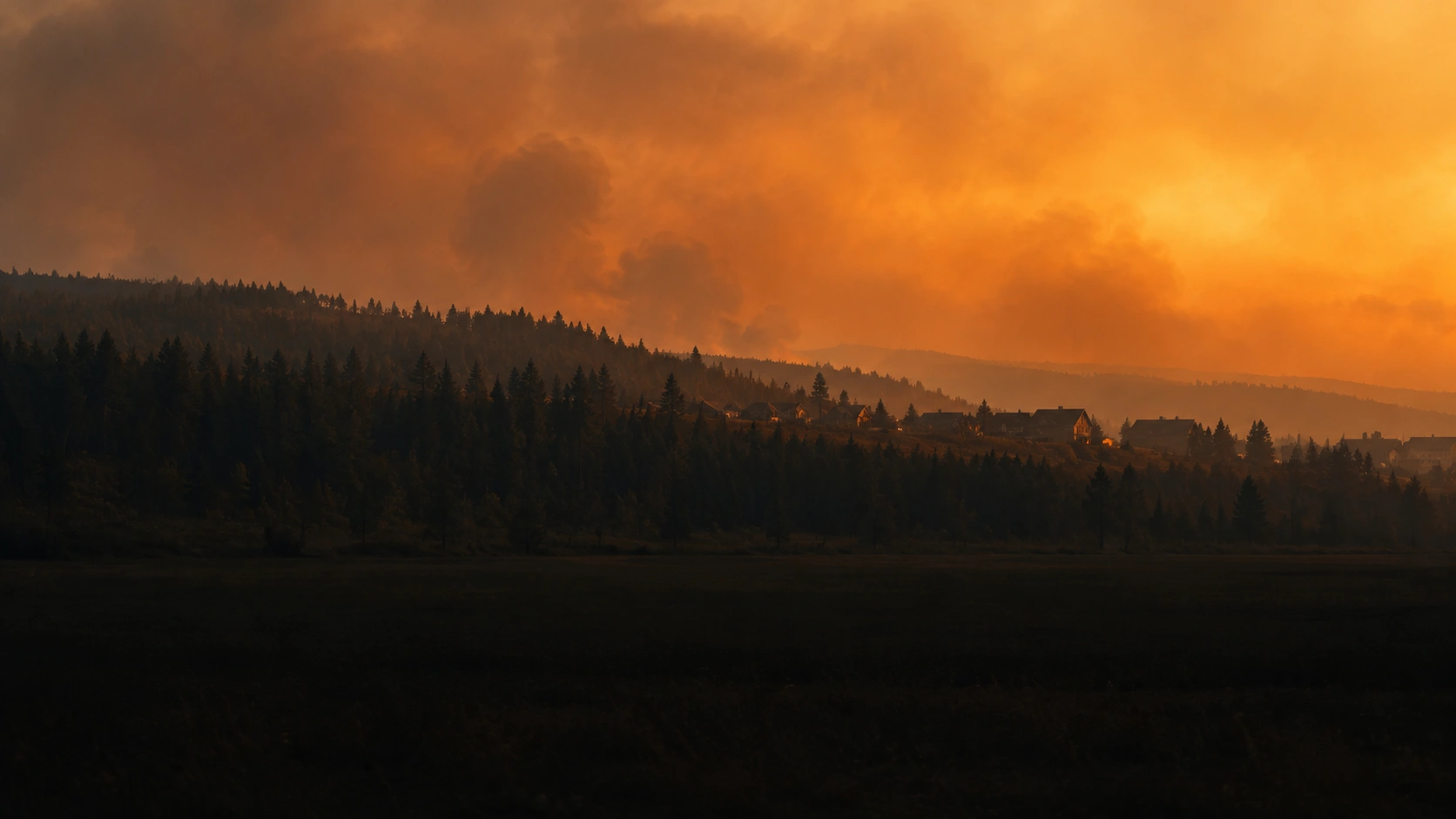
A large study in JAMA Pediatrics links wildfire smoke during pregnancy to a higher risk of autism in the child. It shows an association, not proven cause. The work was published October 26, 2026, and analyzed data on nearly 900,000 US mother-child pairs.
What the researchers did
A team led by Stefania Papatheodorou of the Rutgers School of Public Health used Medicaid data from 2007-2014: 893,212 mother-child pairs. For each mother's ZIP code they estimated weekly levels of fine particles (PM2.5) specifically from wildfire smoke. Then they tracked which children were later diagnosed with autism (8,357 cases) and ADHD (22,302 cases).
- autism: risk 1.30 times higher per 0.75 µg/m³ of smoke over pregnancy (95% confidence interval 1.07-1.59);
- ADHD: 1.03 (interval 0.91-1.17), so no link was found;
- the autism link was strongest for smoke in mid to late pregnancy rather than early.
What the numbers mean per person
"30% higher" sounds alarming, but it is a relative risk. By age 8, 1.9% of children in the study had an autism diagnosis. Multiply that by 1.30 and you get about 2.5%. That's roughly 6 extra cases per 1,000 children for a notable rise in smoke exposure. This is our own back-of-the-envelope estimate, not a figure from the paper.
Why you can't say "smoke causes autism"
The study is observational: it shows two things occur together, not that one causes the other. The authors list the limits themselves:
- the sample covers Medicaid families only, not the whole country;
- smoke was estimated by ZIP code, not measured for each woman;
- births ended in 2014, before the worst fire seasons;
- the biological mechanism wasn't studied.
It isn't the only study
Others have seen a similar signal. A UCLA and UC Davis study in Environment International (over 8.6 million California births, 2001-2019) found only a weak link with average smoke. But pregnancies in the top 10% of smoke exposure had a 6% higher likelihood of autism, rising to 50% in areas with low background air pollution. Days with PM2.5 at 35 µg/m³ or higher mattered; lighter smoke did not. Those authors also stress that causation isn't established.
Two independent studies on different data point the same way, cautiously. That is a reason for more research, not for panic.
What this means for pregnant people
The JAMA Pediatrics authors say reducing exposure to smoke is sensible as fires become more frequent. In practice: check the air quality index, spend less time outdoors on smoky days, and keep windows closed. These are general measures; decisions about pregnancy care belong with a doctor.
Editor's view: the takeaway is not "smoke causes autism" but "smoke is an exposure worth cutting where we can." For readers in places where forests and grasslands burn each summer, it is one more reason to watch the air quality in smoke season.