63% of US voters don't want an AI data center built near their home, according to a CNBC survey conducted October 14-18, 2026. Only 13% support one. The main worries: higher electricity bills, water use and noise.
What the poll found
The CNBC All-America Economic Survey, run by Hart Research Associates and Public Opinion Strategies, polled 1,000 registered voters. About half were asked about data centers (margin of error 4.38 points), specifically one within 10 miles of their home.
- 63% oppose, 13% support;
- Democrats: 80% oppose, 4% support;
- MAGA supporters: 29% support, 40% oppose.
It's not a one-off. An NBC News poll (August 20 - September 1, 2026) found 69% opposed local AI data centers, including a 57% majority of Republicans. The issue now cuts across party lines and is showing up in campaigns on both sides.
Why a data center is more than a building
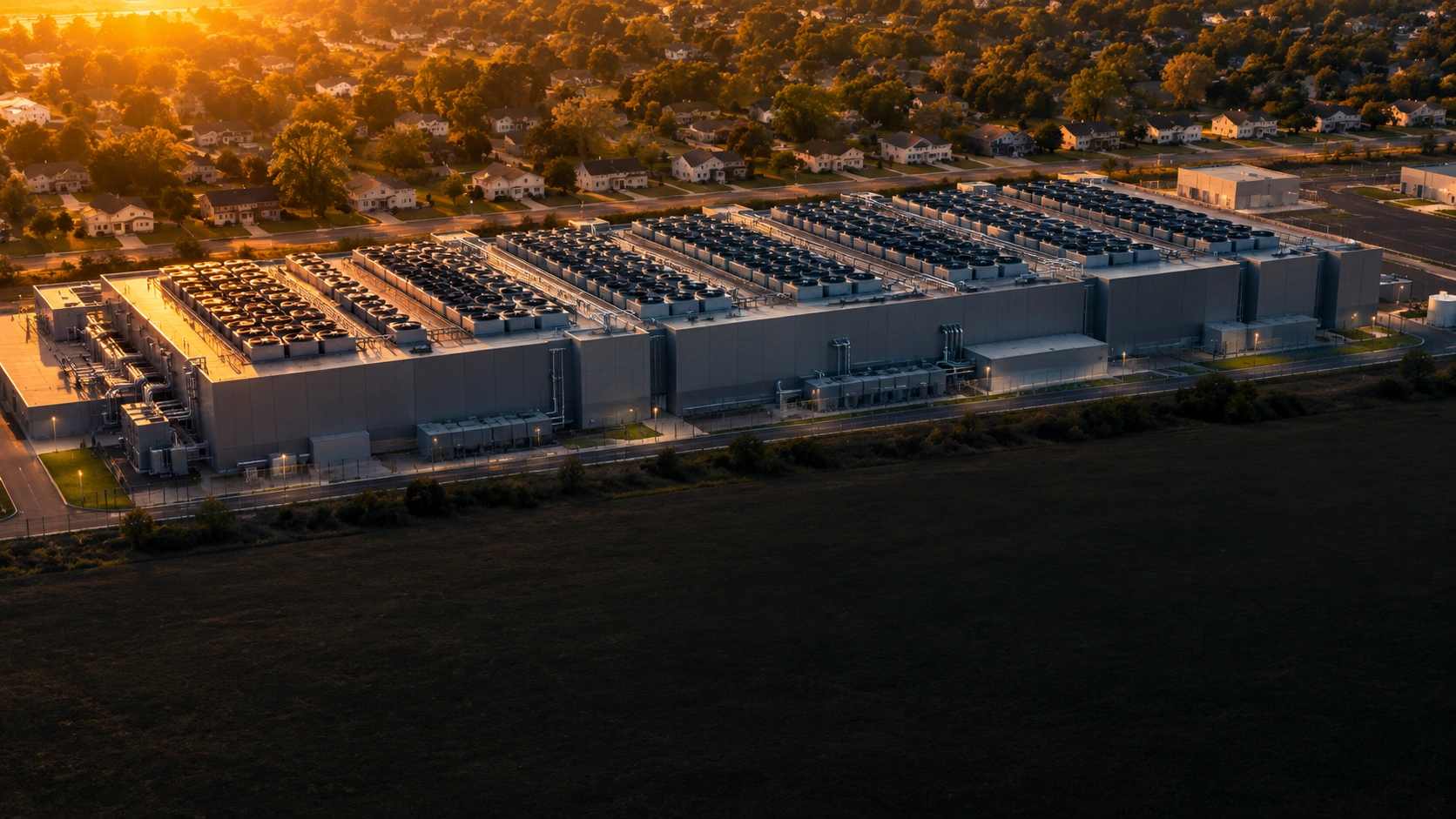
A data center is a giant warehouse of servers (powerful computers) that run around the clock, handling requests to ChatGPT and other AI tools. Servers use a lot of electricity and run hot, so they need cooling, often with water.
The scale, according to the International Energy Agency (IEA):
- in 2024, the world's data centers used 415 TWh, about 1.5% of global electricity;
- by 2030 that could reach 945 TWh, slightly more than all of Japan uses today;
- in the US, data centers will account for nearly half of all electricity demand growth through 2030.
Why neighbors' bills can go up
When a customer the size of a small town moves in, the utility has to build new lines and plants. Those costs are often spread across all customers, households included. Think of a new neighbor who plugs in a hundred space heaters, and the whole building pays for the rewiring.
In a George Mason University survey (April 2026, 1,068 adults), 59% of Americans expected their bills to rise if a data center opened nearby. Most supported requiring data centers to offset their impact, for example by installing solar panels and helping weatherize nearby homes.
The industry sees it differently. Dan DeOrio of the Data Center Coalition, as paraphrased by CNBC, says data centers create jobs, bring investment and tax revenue, and that operators plan to pay for the energy they use.
Why it matters beyond the US
The fight started in America, but it affects everyone who uses AI: every chatbot query runs in a data center somewhere. The IEA notes that after the US, demand is growing fastest in China, with Europe also a significant share.
Editor's view: "who pays for AI's electricity" is about to become a global question. Where data centers go up near homes, it makes sense to require that the owner, not the neighbors, pays for the extra strain on the grid. For how an overloaded grid can leave whole cities in the dark, read our piece on blackouts.